Mines game review 2026 Casino888 RTP, provider & max win

Mines Game Review 2026 — Casino888’s Version: provider, RTP, volatility, max win and bonus rules Estimated reading time: 7 minutes Key takeaways Always confirm the Mines provider and published RTP in the Casino888 game info before staking. Provably fair is vendor-dependent; check the in-game verification tool or third‑party audits. Mines bonus contribution varies by promotion — read Casino888’s T&Cs before using bonus funds. Use small, repeatable stakes and set session loss limits because Mines is high-variance and fast-paced. Mines game review 2026 — which provider is on Casino888? “Mines” is not a single standardized title; multiple suppliers sell their own Mines versions. Casino888 may list one or more of them. The provider matters because it determines the published Mines RTP, volatility, and built-in limits like a maximum win. On Casino888 the supplier is visible in the game lobby or the game’s information panel. Look for the provider name under the game title — common suppliers include Spribe, Hacksaw, Turbo Games, Dragon Gaming, Stake Originals or Galaxsys. If you spot a provider name, here’s why it matters: Spribe versions are widely distributed and are often reported around a 97% RTP; that’s a different baseline to other vendors (see this general list of providers and stats for context). Provider RTP comparisons Hacksaw Gaming variants have been reported with RTPs up to about 98% in some markets, which changes the house edge and long-term expectation. Provider notes and RTP Turbo Games lists Mines with provably fair tech in some releases and a reported RTP around 94.5% for certain builds—again, configuration-dependent. Turbo Games Mines overview If Casino888 doesn’t show a provider in the lobby, open the game’s “i” or rules panel. That panel should list the version, RTP and any max-win and volatility notes — if it doesn’t, raise it with Casino888 support before you play. Mines game review 2026 — RTP, volatility and provably fair checks A first check in any Mines game review 2026 is the advertised RTP. There is no single Mines RTP across the market — suppliers and even builds from the same supplier publish different percentages. Examples make that clear: Spribe versions are commonly cited near 97%. Hacksaw variants have been reported up to 98%. Turbo Games has listed about 94.5% in some versions, and Galaxsys can advertise up to 98.89% depending on configuration. These are provider-level figures and cannot be assumed for your Casino888 lobby without verification. How Mines works and RTP differences Volatility in Mines is driven primarily by the number of mines you choose at the start. More mines increase the chance of an early bust but inflate per-tile multipliers. Fewer mines reduce short-term variance but cap potential single-round gains. On the technical side some Mines versions are promoted as Mines provably fair. That doesn’t mean every Mines on Casino888 is provably fair; specific crypto-leaning and operator-original builds provide a mechanism for players to verify round seeds and math. If provable fairness is advertised, the game interface will usually include a verification tool or a link explaining how seeds/hashes are generated and checked. Turbo Games and Stake Originals are two examples where provably fair claims appear in vendor materials. Turbo Games provably fair Stake Originals provably fair How the Mines mini-game actually plays on Casino888 Mines on Casino888 will play like the standard 5×5 grid instant game in most implementations. You pick a number of mines, place a stake, then reveal tiles one by one. Each safe tile increases the displayed multiplier and you can cash out manually at any time. Key mechanics to confirm in the Casino888 game panel: Grid size (most are 5×5; some providers offer configurable grids). Mine selection options and how multipliers scale per pick. Whether the cash-out must be done manually or if there is an auto-cashout option. Any maximum single-round win limit imposed by the provider or Casino888. If the Casino888 info screen is explicit, it will show the per-pick multiplier table or at least the win curve for a given mine count. If it doesn’t, that’s a red flag — you want to know the payout progression before risking a session bankroll. Mines max win, features and session pace One of the most-searched items is the Mines max win. Reported maxima vary widely: some listings show maxima up to 10,000× the stake for specific titles, but that is not universal and usually applies to a particular provider or configured game. For example, a SlotCatalog entry shows a 10,000× cap for a Fa Chai variant — you should never assume that applies to the Mines you find on Casino888 without checking the game’s limits. Example max-win listing Practical points about max wins and features: Mines is a short-session, high-frequency game. Sessions can produce quick swings in either direction. If a provider lists a cap like 10,000×, read the small print: there may be per-round or cumulative caps, especially with regulated operators. Some versions add features such as adjustable grid sizes, auto-pick modes, or “safety” buttons that remove one random mine after a purchase — those features alter expected volatility and should be visible in the rules panel. For risk management, know how much a single bust would cost relative to your session bankroll. Because Mines can evaporate a stake in one click, stake sizing matters more than in medium-volatility slots. Do Mines wagers count for Casino888 bonuses? Whether Mines wagers count toward Casino888’s wagering requirements is determined by the specific promotion’s terms. There is no universal rule that “Mines always counts” or “Mines is always excluded.” Before using bonus funds on Mines at Casino888, check the promotion’s T&Cs for these items: Game contribution: does Mines contribute 100%, a reduced percentage (e.g., 10–50%), or 0% toward wagering requirements? Maximum stake while wagering: many operators limit the allowable bet size when clearing bonuses. Excluded game classes: instant, arcade or crash-style games are sometimes explicitly excluded. Maximum cash-out on bonus wins: some promos cap the amount you can withdraw after meeting wagering. If the promo T&Cs don’t mention Mines by name, treat
Poker like a pro 30-day plan for £0.50/£1 Hold’em routines

Poker Like a Pro: A 30-Day Training Plan for Position, Ranges, Pot Odds and Bankroll Estimated reading time: 12 minutes Key takeaways Lock a single format and follow a 30-day calendar that combines table work with short, focused study. Master position and disciplined preflop ranges in Week 1, then build pot-odds math and equity in Week 2. Translate preflop discipline into credible postflop lines, semi-bluffs and solver-informed review in Week 3. Protect your bankroll with stop-loss rules, tilt drills and clear moving-up criteria in Week 4. Why a focused 30-day plan helps you play poker like a pro “Playing like a pro” isn’t about memorising solver outputs or fancy lines. It’s about consistent decision quality: folding when odds are wrong, applying pressure when profitable, and protecting your bankroll so variance cannot bankrupt progress. Poker isn’t a slot with an RTP — results depend on your choices, blind structure, rake, opponents and variance. The plan mixes table work with focused study so you learn mechanics at the table and immediately review hands that challenged you. How the 30-day calendar is structured The plan breaks into four weekly phases. Each day has a 60–90 minute table session and 30–45 minutes of structured study or review. Week 1 — Foundation: rules, position, and basic preflop ranges. Week 2 — Pot odds, equity, and simple outs-to-equity drills. Week 3 — Postflop play: continuation bets, value-betting, and logical bluffs. Week 4 — Bankroll, tilt control, table selection and moving up/down. Each week ends with a cumulative review session where you tag and study 6–10 hands you marked during play. Week 1 drills — Position and disciplined preflop ranges Start by locking down one format: cash games or MTTs. The play and objectives differ; pick one and specialise for the month. For a quick rules refresher, the Texas Hold’em basics are useful. Daily drills (30 minutes): Open a position chart and memorise one line per seat (early, middle, late, blinds). Play only those hands for the first two sessions; mark any hand that didn’t fit the chart. Note why you adjusted — was it table aggression, deep stacks, or a loose blind defender? Why position matters: late positions see other players act first and can widen ranges safely. PokerStars highlights position, starting hands and decision quality as core topics; internalise them so folding becomes a strength, not a frustration (position and strategy). Practical table rules for Week 1 Button: widen opens by 20–40% versus early position. Cutoff and hijack: open slightly tighter when there’s a loose 3-bettor to your left. Small blind: fold more marginal hands unless the price and postflop playability justify a defend. Record your opening hands and the result. The point is not daily win-rate but pattern recognition: are you over-folding in late position, or overplaying marginal hands in early position? Week 2 drills — Pot odds, equity and concrete math Week 2 moves from “what” to “why.” Learn to convert outs into rough equity and compare that with pot odds. Poker decisions should be mathematical anchors with a dose of opponent reading. Daily drills (30–45 minutes): Run 20 examples of common draws: count outs, convert to approximate river/turn odds (rule of 2/4), and check if pot odds justify a call. Play one session where every call to a draw requires you to say the pot odds aloud before deciding. Mark hands where you miscounted or guessed; those go into your review list. Example calculation: if the pot is £100 and a call costs £25, your break-even equity is 16.7%. If your hand’s equity against the opponent’s range is above that threshold, the call is +EV in isolation. PokerStars recommends learning outs and pot odds as fundamental building blocks (pot odds and outs). Equity versus range — the pro difference A common recreational mistake is estimating equity against a single hand. Professionals estimate equity versus a range. Ask: what hands does my opponent bet here? Is my draw clean against that range? If the opponent is raising from late position, their range narrows — and your equity changes. Week 3 drills — Postflop lines, bluff logic and advanced poker strategy Week 3 is about translating preflop discipline and maths into credible postflop lines. Good bluffs are consistent with your range and the board texture. Daily drills (45 minutes play + 30 minutes study): Play a session where every multi-street bluff must meet three criteria: credible range story, foldable opponent range, and sufficient bet sizing. Practice semi-bluffs: choose two hands per session to lead turn as a semi-bluff and record outcomes. Review hands where you bluffed on the river after missing a draw — did your line represent a value hand or were you forcing action? Remember: semi-bluffs win in two ways — by making opponents fold and by improving to the best hand. Use solvers or training materials to check whether your line represented a balanced range. Poker training needn’t be a black box; compare decisions to trusted resources like PokerStars’ learning hub (PokerStars learning). Week 4 — Bankroll rules, tilt control and moving up responsibly Week 4 ties everything together. If you don’t manage money and emotions, technical skill won’t save you. Bankroll rules to follow: Cash games: conservative guidance commonly recommends at least 50 buy-ins; some sources suggest 20–30 as a minimum for smaller stakes. The World Poker Federation and sites like 888poker discuss these ranges. Tournaments: aim for 100 buy-ins for large-field events; sit-and-gos often recommend 50 or more. Keep poker funds separate from living expenses and emergency savings, as 888poker advises. Stop-loss and session limits: Set a session loss limit in monetary terms and in time (e.g., £150 or two hours). If you hit the stop-loss, close the client and review two tagged hands before returning another day. If you lose two consecutive sessions by stop-loss, step down stakes and review a larger sample. Tilt control drills: Set a pre-session checklist: sleep, last meal, emotional check-in, and your session goals. Practice a one-minute breathing exercise when you feel
888 casino welcome bonus £100 match vs 88 free spins

888 Casino UK welcome bonus: 100% deposit match vs 88 no-deposit free spins — which gives you more withdrawable cash? Estimated reading time: 7 minutes Key takeaways The deposit match has the higher withdrawal cap (£100) but needs much more wagering (10x the bonus) and often a deposit of at least £10. The 88 no-deposit free spins require no upfront cash but convert to bonus funds with a 10x wagering requirement and a £50 max withdrawal and must be cleared within seven days. Use only 100% contributing video slots to burn wagering efficiently and choose bet sizes that let your bankroll sustain the required number of spins. How the 888 casino welcome bonus options compare At a glance the two offers look similar because both carry a 10x wagering multiplier on bonus funds, but the practical differences change the math and the player experience. 100% deposit match: matches your first deposit 1:1 up to £100, 10x wagering on the bonus, and a maximum of £100 convertible to your cash balance once wagering completes. Reported terms also require staking your deposit on selected slots within 48 hours and the bonus lasts 90 days after crediting (check the live promotion for exact details) (Independent report). 88 free spins (no deposit): 88 spins credited with no deposit required, winnings convert to bonus funds that must be wagered 10x within seven days, and you can only withdraw up to £50 from this promotion (888 promo page). They sound straightforward, but the crucial differences are: the time you have to clear wagering (7 days vs 90 days), whether cash stake helps clear the requirement (it typically doesn’t for these offers), eligible games, and the hard cash cap on what you can bank from the bonus. 100% deposit match: mechanics and a realistic play plan The deposit match is appealing because matching up to £100 can give you a sizeable bonus to play with. But the headline is only part of the story. Mechanics you need to know: Minimum deposit reported at £10 to trigger the offer (Independent). Bonus equals your deposit up to £100 and carries a 10x wagering requirement on the bonus amount. Maximum convertible winnings from that bonus are capped at £100. Some payment methods—Skrill and Neteller—have been reported excluded from similar £10 welcome offers, so check the live terms for the specific campaign (PlayCasino note). Wagering often consumes bonus funds only after your cash balance is depleted according to the reported terms, so your deposit bankroll will be used first while the bonus sits separately until triggered by play (Independent). Concrete example — deposit £100 (full match): Bonus credited: £100. Wagering requirement = 10 x £100 = £1,000. Maximum you can convert to withdrawable cash from this bonus = £100. What that means: you must place £1,000 of qualifying stakes while following eligible-game rules and contribution rates (see below). After you clear the £1,000, any remaining bonus-derived funds convert, but you cannot cash out more than £100 from this bonus-win pool. Smarter deposit sizing. If you’re trying to balance effort and potential, you don’t necessarily need to deposit the full £100. Two examples: Deposit £20 → bonus £20 → wagering = £200. Lower target, so less time and volatility exposure. But your upside is still limited by the £100 cap, and with a small bonus you’re unlikely to hit that cap unless you get lucky. Deposit £100 → larger playroom but much higher wagering (10x). If you clear it, you can bank up to £100; if you don’t, you may waste time and bankroll trying. Practical play plan for the deposit match: Only play games that contribute 100% to wagering (video slots and many branded slots are usually 100%). Avoid live tables and blackjack while clearing bonus because they often contribute only 10% or less (contribution table). Choose slots with mid–high RTP to reduce house edge while you grind the wagering down. Check each slot’s RTP in its paytable rather than assuming averages. Use a consistent small bet size so your bankroll lasts long enough to clear the wagering. Example: to clear £1,000 wagering at £0.50 per spin you need 2,000 spins; at £0.20 per spin you need 5,000 spins. Pick a bet level you can sustain without chasing losses. Confirm deposit method exclusions before funding. If Skrill or Neteller are excluded for the campaign, use a debit card or other accepted method. 88 free spins: quick pressure, limited upside No-deposit offers are psychologically attractive because they don’t take money up-front, but they also compress your time and cap the upside materially. Key mechanics from the official page: 88 free spins are credited with no deposit needed; any winnings are converted into bonus funds rather than cash (official 88fs terms). Converted funds must be wagered 10x within seven days of being credited. Only stakes placed with restricted (bonus) funds count toward the wagering—staking with available cash won’t help clear the requirement. Eligible games for the promo include titles such as King Kong Splash, Fishin’ Frenzy variants, Game of Thrones and The Goonies Quest for Treasure 3 (eligible games list). Maximum withdrawable from the promotion is £50; anything above that is removed after wagering completes. Why that matters in practice: The seven-day deadline creates real time pressure. If your spins land a modest win (for example £20–£30), you must then use that credited bonus balance to play and meet 10x (so £200–£300 of wagering) inside one week. Because only the restricted bonus funds count, you can’t “top up” with cash to speed this up. Concrete example — you win £30 from the 88 spins: Bonus credited: £30. Wagering required: 10 x £30 = £300. You must place £300 worth of qualifying bets with the bonus funds within seven days to free the converted amount, and even then your withdrawal cannot exceed £50. Practical play plan for the spins: Play the list of eligible slots only, since those are the games 888 specifies for the promotion (official page). Because only bonus stakes count,
Live Blackjack Strategy on 3-to-2 S17 Tables — 99.5% RTP

Live Blackjack Strategy — Play Like a Pro on 3:2 S17 Tables (Rule‑Specific Basic Strategy, Bonus & Bankroll Checklist) Estimated reading time: 8 minutes Key takeaways Always choose 3:2 payout, S17, and DAS tables when available to minimize house edge. Use a rule‑specific basic strategy chart (the provided 8‑deck S17/DAS chart) and follow it hand‑by‑hand. Manage bonuses and bankrolls: check wagering contributions, cap rules, and use flat/modest bet sizing with session limits. How live blackjack strategy starts at the table: rules that matter Before you make a single decision, scan the table info. The difference between a 0.5% house edge and 2%+ is almost always in the rules, not luck. Blackjack payout: Always prefer a table advertising 3:2 blackjack payout. A 6:5 payout inflates the house edge sharply and is a dealbreaker for pro play. Dealer on soft 17: Look for S17 (dealer stands on soft 17). S17 is player‑friendly; H17 (dealer hits soft 17) increases the house edge and changes some optimal plays. Doubling rules: Double on any two cards and Double After Split (DAS) are important. DAS preserves many profitable doubling opportunities and reduces the house edge. Deck count: Fewer decks slightly favor the player. Eight decks is common in live games; use a rule‑specific chart for the deck count shown. Surrender & splits: Early or late surrender and reasonable multi‑split rules add a small but real edge when used correctly. If the live game description also lists RTP or provider, use that. Top providers quote near‑theoretical RTPs when standard rules apply, so a listed ~99.5% is a green flag. For example, major studio comparisons commonly quote Evolution at around 99.5% under standard rules, while some variants and providers sit slightly lower. Live blackjack strategy: the S17/DAS 8‑deck chart you can use now The single most effective step you can take is to play with a rule‑specific basic strategy chart. Below is a compact, ready‑to‑use chart for an 8‑deck game where the dealer stands on soft 17 (S17) and Double After Split (DAS) is allowed. Use this hand‑by‑hand — treat each rule as a non‑negotiable instruction. Hard totals (no Ace counted as 11) Hard 8 or less: Hit. Hard 9: Double vs dealer 3–6, otherwise Hit. Hard 10: Double vs dealer 2–9, otherwise Hit. Hard 11: Double vs dealer 2–10, Hit vs Ace. Hard 12: Stand vs dealer 4–6, otherwise Hit. Hard 13–16: Stand vs dealer 2–6, otherwise Hit. Hard 17 or more: Stand. Soft totals (Ace counted as 11) Soft 13 (A,2) / Soft 14 (A,3): Double vs dealer 5–6; otherwise Hit. Soft 15 (A,4) / Soft 16 (A,5): Double vs dealer 4–6; otherwise Hit. Soft 17 (A,6): Double vs dealer 3–6; otherwise Hit. Soft 18 (A,7): Double vs dealer 3–6; Stand vs dealer 2,7,8; Hit vs 9–Ace. Soft 19 (A,8) and Soft 20 (A,9): Stand (A8 may Double vs dealer 6 in very aggressive charts, but stand is standard). Pairs (splitting) Always Split: Aces and 8s. Split 2s & 3s: Split vs dealer 2–7; otherwise Hit. Split 4s: Generally do not split (Hit instead); split only vs 5–6 in some casino‑specific charts. Split 5s: Never split — treat as hard 10. Split 6s: Split vs dealer 2–6; otherwise Hit. Split 7s: Split vs dealer 2–7; otherwise Hit. Split 9s: Split vs dealer 2–6 and 8–9; Stand vs 7,10,Ace. Never split 10s (or 10‑value cards). Use this chart as your baseline for an 8‑deck S17/DAS live table. Practicing with it will convert what would be a ~2% edge for random play into the ~0.5% pro‑level edge most sources cite when basic strategy and favorable rules are used. For the underlying math on how basic strategy reduces the house edge, see a compact house‑edge comparator for casino games. Spotting pro‑friendly live tables in the studio lobby Live providers add a lot of flavor and design, but the critical data is in the game info panel. Before you sit at a live table, check these items in the panel or rules window: Advertised payout for blackjack: 3:2 vs 6:5. Dealer behavior on soft 17 (S17 vs H17). Doubling rules and whether Double After Split (DAS) is allowed. Number of decks and whether the shoe is manually shuffled or uses continuous shuffling (which affects countability more than basic strategy). Any max‑bet rules during bonus wagering or promotional play. Major providers like Evolution and Pragmatic run many live tables and variants; provider reputations matter because their “standard” tables usually default to player‑friendly combos. For a direct comparison of studio depth and table counts, see a recent studio comparison that lists Evolution and Pragmatic Play Live table offerings and typical RTPs. How to use bonuses and wagering to support your live blackjack strategy Bonuses can be useful — but they can also mask rules that punish blackjack players. The pro move is to treat a bonus as another game to be evaluated by math, not emotion. Read the wagering rules: A wagering requirement is the amount you must bet before bonus funds (and winnings) become withdrawable. See a clear primer on how wagering requirements work. Check blackjack contribution: Many promos count blackjack bets at a reduced percentage (10–20%) toward wagering, or exclude them. A reasonable target is ≤30x wagering with ≥20% contribution if you plan to play blackjack as the wagering vehicle. Watch max‑bet clauses: Casinos often cap the maximum allowed bet while a bonus is active; breaching this can forfeit the bonus. Example math to keep in mind: if the bonus requires 30x wagering and blackjack only contributes 20%, your actual required blackjack wagering multiplies by five. Even at a ~0.5% edge that turnover creates a real expected loss on the wagering. That’s why understanding wagering requirements and game contributions is essential. For a deeper look specifically at blackjack‑eligible bonuses and contribution percentages, consult a dedicated guide on blackjack bonuses. It will tell you which promos are actually playable by basic‑strategy players and which aren’t. 18+, T&Cs apply, gamble responsibly. Bankroll rules: how blackjack bankroll management keeps the edge real
Safest Online Blackjack Play A Practical Guide for Players

Safest Way to Play Blackjack Online: A Practical, Player-Centered Guide Blackjack is one of the friendliest casino games for players who want to combine entertainment with a real chance to influence their results. But the online environment adds layers of risk you don’t face at a brick-and-mortar table: cybersecurity threats, unclear licensing, bad rule sets and predatory bonus terms. The safest approach to playing blackjack online is therefore twofold: protect your money and identity, and play the game in a way that minimizes the house edge. Do both and you turn a risky pastime into a controlled one. Below I walk through the exact steps I recommend—practical checks you can do in five minutes, game choices that actually matter, and bankroll rules that prevent a fun session from turning into a costly habit. I’ll also flag the warning signs to walk away from and include links to the authoritative resources cited in the industry guidance I used. 1. Start with the right operator: licensing and reputation The single biggest safety decision you make is where you deposit your money. A regulated, licensed casino means there’s an independent body overseeing fairness, the handling of player funds and dispute resolution. Reputable regulators to look for include the UK Gambling Commission and the Malta Gaming Authority—these are the names operators often display on their sites because they matter. Practical checks: Find the license badge in the site footer, click it and verify the license number on the regulator’s public register. Look for a physical address and clear contact channels (live chat and email). Operators who hide contact details are a red flag. Read recent player reviews and any regulator enforcement action against the operator. If you want a short primer on this first step, see the “How to safely play blackjack online” guidance compiled by CasinoFlash, which walks through license and verification checks in detail: How to safely play blackjack online (CasinoFlash). The same themes—license, transparency and oversight—are echoed across industry commentary including this practical recap from CasinoLife Magazine: Key takeaways: how to stay safe playing blackjack online (CasinoLife Magazine). 2. Lock down your security: data, devices and payments Once you’ve chosen a licensed operator, your next job is to make sure your account and money can’t be trivially compromised. Online casinos process sensitive data (personal details and payments), so basic security hygiene is essential. What to check and why it matters: SSL and HTTPS: Look for “https://” and the padlock in your browser address bar. That indicates SSL/TLS encryption between your device and the casino’s servers, which prevents casual interception of credentials and payment details. This is the simplest baseline check and it matters—no padlock, no trust. Secure payment options: Use payment methods with buyer protection and fraud monitoring (e.g., reputable e-wallets or card providers). These methods add a layer between your bank account and the casino and can simplify disputes. Strong, unique passwords and 2FA: Use a password manager to generate a distinct password for each gambling site and enable two-factor authentication (2FA) if the casino offers it. This prevents credential stuffing attacks where credentials from a breached site are reused. Avoid public Wi‑Fi and unsafe apps: Don’t log into gambling accounts on public networks unless you’re using a private VPN. Only install casino apps from official app stores or play via the operator’s website. Malicious copies can harvest credentials. For a deeper look at casino cybersecurity basics and how operators recommend safeguarding winnings and accounts, the BMM Magazine piece on cybersecurity in online blackjack is a helpful read: Cybersecurity in online blackjack (BMM Magazine). The practical safety checklist at Info4Gambling also summarizes device and account protection steps you can implement immediately: 7 essential safety measures for online blackjack (Info4Gambling). 3. Choose the right game and rules: small differences, big impact Not all online blackjack is created equal. Rule differences and side bets dramatically change the expected return to the player—sometimes by more than the effect of strategy errors. If you want the “safest” financial play, choose variants and tables that give you the best mathematical chance over the long run. Key rule considerations: Payout for a natural blackjack: Look for tables that pay 3:2 on a natural blackjack. Avoid 6:5 blackjack tables—these are materially worse for players and increase the house edge significantly. Number of decks: Fewer decks usually slightly favor the player, all else equal. Don’t obsess over decks, but prefer lower-deck counts if the rules are good. Dealer behavior and surrender: Dealer standing on soft 17 (S17) is better for the player than hitting on soft 17 (H17). If late surrender or early surrender is offered under fair conditions, that can reduce the house edge further. Avoid side bets unless you understand them: Side bets carry a much higher house edge and are generally designed to be profitable to the operator. If your goal is a safe financial approach, stick to main-hand play using basic strategy. Casino operators sometimes advertise “fancy” blackjack with side bets or 6:5 payouts ostensibly to attract casual players. The practical takeaway: read the paytable and rules before you ante up. For a basic walkthrough of favorable blackjack rules and why they matter, NJ.com’s blackjack guide covers the rule differences that affect strategy and expected returns: How to play blackjack (NJ.com). 4. Play with the math: use basic strategy and sensible bet sizing If you want to minimize the house edge—i.e., take the safest financial approach during play—you must follow basic strategy. Basic strategy tells you the mathematically optimal decision for every two-card player hand versus the dealer’s upcard, given the rules and deck count. It doesn’t guarantee a win, but it reduces the house edge to the lowest possible figure for simple, non-counting play. Practical points: Use a basic strategy chart: Before you play for real money, have a chart handy (or use a legal trainer app). Online, you can consult basic strategy charts adapted to the exact rule set you’re playing. Avoid emotional deviations: Doubling down or splitting at the wrong
Blackjack With Basic Strategy Is the Safest Starter
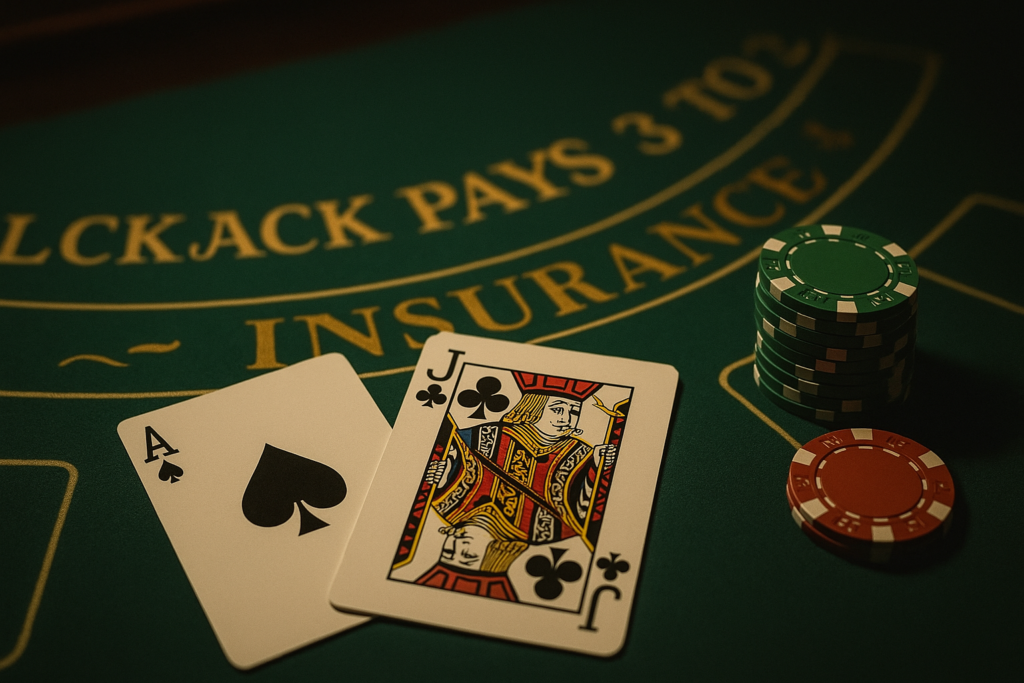
The safest casino game to start with — a practical guide for beginners Ask a dozen gamblers what the “safest” casino game is and you’ll get a dozen opinions. But if you mean “lowest expected loss, easy to learn, and playable at trustworthy casinos,” the research and experienced players point to one clear starter: blackjack played with basic strategy. That doesn’t mean it’s perfect for everyone, but it combines a very low house edge, straightforward decisions you can learn, and transparent rules you can check before you sit down. What “safe” should mean when you pick a casino game Before recommending a single game I like to define “safe.” For casino play, safety breaks into three practical dimensions: Financial safety (expected loss) — the game’s house edge and volatility. Lower house edge means lower long‑term loss per dollar wagered; lower volatility means your bankroll doesn’t spike up and down wildly. Cognitive/operational safety — simple rules, low chance of making accidental costly plays, and visible fair mechanics (no opaque paytables or buried side bets). Platform and consumer safety — you should be playing at a licensed, audited casino with secure payments, clear payout policies, and tools for responsible play. “Safest game” in this article scores well on all three: low house edge, easy-to-master basic decisions, and commonly available at regulated casinos. For the platform side, consult a checklist like the one at RotoWire’s casino safety guide, which highlights licensing, independent testing, encryption, and responsible‑play tools. Why blackjack is the safest place to start Blackjack stands out because skill matters, but the skill is finite and learnable. With a solid basic strategy you can reduce the casino’s edge to a fraction of other games. Low house edge: Guides consistently put blackjack’s house edge around 0.5–1% when you use basic strategy (and in some rule sets it can be as low as ~0.5%). Sources that compare casino odds put blackjack at the top of the list for best player chances — see Riverwind’s breakdown of casino odds and Rain Rock’s summary of games with strong odds. (Riverwind on best chances, Rain Rock on casino odds). Near 50/50 outcomes per hand: With proper play each hand is close to a coin flip—roughly a 49–51% win probability depending on rules and payouts—so your day‑to‑day results are more predictable than volatile slot sessions. Skill reduces loss: Blackjack’s basic strategy is a finite decision chart. Learn it, and you materially lower your expected loss versus random play. Unlike roulette or slots, where nothing you do changes the house edge, blackjack rewards study. New players also find blackjack approachable. Casinos and guides commonly recommend it as a top table game for beginners because the rules are straightforward and you make a small number of clear decisions each hand (hit, stand, double, split, surrender where allowed). For a readable beginner intro, see the Newcastle Casino guide on top games for new players: Best casino games for beginners. Important caveats: blackjack isn’t uniform Not all blackjack is created equal. The advertised house edge assumes “standard” rules and the use of basic strategy. Beware these rule changes that raise the house edge: 6:5 blackjack payouts on natural 21 instead of 3:2 — these increase the edge substantially. Restricted doubling/splitting rules (e.g., no double after split) that reduce player options. Continuous shufflers and some multi‑deck games can shift dynamics versus single‑deck, though skill still helps. Side bets (Perfect Pairs, 21+3, insurance) — most have much higher house edges than the main game and should be avoided for safety-focused play. Bottom line: check the rules and payouts before you play. If a table uses 3:2 payouts and allows standard doubling and splitting, blackjack will usually be the lowest‑edge game on the floor. Other safe starting games — alternatives if blackjack isn’t your style If you want other options, a few games also score well on safety when you stick to the simplest bets. Craps — safe if you stick to the Pass Line and simple bets Craps looks intimidating because of the dense table, but the basic bets are low‑edge and social. The Pass Line and Come bets, often combined with free Odds bets, are among the lowest‑house‑edge options on the floor. A number of odds breakdowns put the casino hold on these fundamental bets near 1% or less when played correctly (see basic comparisons in the Riverwind guide and odds breakdown videos). (Riverwind on house edge, YouTube odds breakdown). Pros: strong odds and a friendly, social vibe. Cons: the layout tempts inexperienced players into high‑edge center bets (proposition bets). If you try craps, limit yourself to Pass/Come and Odds until you understand the rest of the table. Baccarat — tiny decisions, low edge if you avoid the tie Baccarat is another low‑edge option for beginners who prefer no strategic study: choose Banker or Player and watch the cards. Expert odds analyses show Banker and Player bets have a casino hold around 1% (Banker is usually marginally better after the commission), while the Tie bet carries a very high house edge (reported as high as ~14% or more in some breakdowns). (YouTube odds breakdown). Pros: easiest to play and very low skill demands. Cons: table minimums are sometimes higher, and the Tie bet is a trap for unschooled players. Roulette — simple, visible odds (but fixed house edge) Roulette is one of the easiest games to understand. Outside bets—red/black, odd/even, high/low—offer almost coin‑flip outcomes. The downside is you can’t improve the house edge with skill; European single‑zero roulette has a house edge of about 2.7%, while American double‑zero is worse. Pros: instant familiarity and low stress. Cons: higher fixed edge than blackjack and no way to lower it through play. Guides for newcomers list roulette as a solid beginner choice for ease of use (see Newcastle’s beginner roundup). (Newcastle beginner guide). Video poker — excellent returns if you study paytables Video poker can deliver very high theoretical returns (often 99%+ on good machines with perfect strategy), making it attractive for methodical players.
Roulette Strategies and Bankroll Management

How to win at roulette: a realistic, research‑backed playbook If you want the headline answer up front: you cannot reliably beat roulette in the long run. The game is designed with a built‑in advantage for the house, every spin is independent, and no betting pattern can change the fundamental math. That said, plenty of players walk away ahead from roulette sessions — not because they “beat” the wheel, but because they managed risk, picked the right table and left at the right time. This article explains how that works in practical terms, why it matters, and how to structure play so you maximize your chances of finishing a session with a profit while protecting your bankroll. The mathematical reality: why the house wins Roulette outcomes are driven by either a Random Number Generator (online) or the physical dynamics of a wheel and ball (live games). The critical fact: each spin is independent. A long run of reds doesn’t “make” black more likely on the next spin. Multiple sources emphasize this independence and the impossibility of predicting future spins from past ones — see the Livescore guide to roulette strategies and the Metropolitana Casinos breakdown of myths and strategies for more on why past spins don’t matter. For live or online play, read the Island Resort & Casino’s dealer Q&A on spinning and randomness for additional context. The house edge in roulette exists because of the zero (or zeros). European-style wheels have a single zero; American-style wheels have both 0 and 00. That structural difference gives European roulette a noticeably smaller disadvantage for the player than American roulette — so your first practical decision matters: choose the single‑zero wheel when you can. Sources discussing these differences include Livescore’s roulette strategy piece and Metropolitana Casinos’ article on roulette strategies and myths. Because of the zero(s), no betting system — Martingale, Fibonacci, Labouchère, or any other progression — can convert roulette into a positive‑expectation game over extended play. Betting systems change the distribution of win sizes and loss sizes, but they don’t remove the house edge. Boothill Casino’s guide, the Cherokee Casino how‑to, and other industry explainers make this point repeatedly: systems ultimately collide with table limits or a finite bankroll. Game selection: small but meaningful advantages There are simple structural choices that tilt the odds ever so slightly in your favour — not enough to beat the house forever, but enough to improve your session-to-session survival and chance to walk away up. Prefer European (single‑zero) roulette: where available, choose single‑zero wheels rather than American double‑zero wheels. The single zero reduces the house edge; when you’re trying to manage a negative‑EV pastime, shaving off house edge is the most effective move you control. See the Livescore analysis for a direct discussion of this choice. Use reputable casinos and RNGs: if you play online, pick operators that publish test certificates or use well‑known providers so you’re actually facing a fair RNG. The Island Resort & Casino dealer Q&A is a useful primer on why reputable randomness is essential. Favor outside bets for smoother play: outside bets (red/black, odd/even, high/low, dozens, columns) hit more frequently and produce smoother bankroll swings than inside bets (single numbers, splits, corners). For many practical strategies, that smoother variance is preferable — it keeps sessions alive longer and reduces the risk of a single catastrophic loss. Bankroll management: where “winning” actually lives If you read nothing else in this article, remember this: disciplined bankroll management is the main reason players leave the table with a profit. Almost every credible guide on roulette — including Boothill Casino, Livescore, Cherokee Casino, and Metropolitana Casinos — stresses limits and session planning over any particular betting sequence. Why? Because roulette is a negative‑EV game: your best weapon is controlling how much of the mathematical disadvantage you are willing to tolerate during a session. Concrete practices that make a difference: Set a loss limit before you start: commit to “I will lose no more than X.” This prevents emotional chasing and stops an hour of bad cards from turning into a financial disaster. Set a win target and bank profits: decide what counts as a successful session (for example, bank 50% of a modest win and keep the rest for play). Many experienced players recommend locking in part of a win and treating the balance as extra play money. Play short sessions: the longer you play, the more likely the house edge erodes your bankroll. Target short sessions with clear start and stop rules to increase the likelihood you can quit while ahead. Divide your bankroll into units: use unit sizing (e.g., 1 unit = $5) and treat your session bankroll as a finite number of units. That helps pace bets and prevents you from escalating stakes recklessly when things go wrong. In short: most players who “win” at roulette do it by leaving at the right time, not by discovering a long‑term exploit in the wheel. Betting systems: what they do, and why they’re risky Betting systems are popular because humans like structure and hope. But it’s crucial to understand that systems only rearrange the pattern of wins and losses; they do not change the expected value. Below is a practical look at the most common systems and how to use them responsibly if you choose to. Martingale (loss‑doubling) How it works: after each loss on an even‑money bet, you double your stake. One win recovers previous losses plus profits equal to the original unit. Example sequence: $10 → lose → $20 → lose → $40 → lose → $80 → win → net +$10. Why players like it: small wins are common. Why it’s dangerous: stake growth is exponential — a long losing streak will either hit the table’s maximum bet or deplete your bankroll. Boothill Casino, Cherokee Casino and Metropolitana Casinos all warn that Martingale is a short‑term thrill more than a viable long‑term plan. Reverse Martingale / Paroli (win‑doubling) How it works: increase bets after wins instead of after losses.
Craps Practical Guide for Players Master the Table Flow

How to play craps: a practical, player‑friendly guide If you’ve watched a craps table — the energy, the shouting, the green felt — you might think it’s complicated. The truth is simpler: craps is a game built around two six‑sided dice and a repeating two‑phase round that beginners can master quickly. Start with the basic bets, learn the flow, and you’ll be part of the action without getting lost in the center‑table prop bets. I’ll walk you through the essentials, explain why each rule matters, and give practical tips to play smart and enjoy the table. How a craps round actually works (the flow that matters) Every round of craps is driven by two dice and one shooter — the player who rolls. The round begins with the shooter’s first toss, called the come‑out roll, and either ends on that roll or moves into the point phase until the shooter rolls the point again or sevens out. That simple loop is what you’ll see repeat over and over at the table. Two six‑sided dice are used and players take turns being the shooter. See a basic overview on Wikipedia’s craps overview. To be the shooter you must have a wager on either the Pass Line or the Don’t Pass before the come‑out roll; that’s standard at live tables — see the Hard Rock Cincinnati table rules for confirmation: Hard Rock Cincinnati: craps table rules. The dealer uses a puck to show the phase: when the puck is OFF, a come‑out roll is due; when it’s ON it marks the active point number. This detail is covered in house guides like the Potawatomi how‑to: Potawatomi’s how‑to play craps. Why this matters: once you understand “come‑out → point → resolution,” you’ll see how different bets resolve and why some wagers (like Pass Line) act like contract bets that stay on the table until the round finishes. The Pass Line and Don’t Pass: your two core bets If you start with nothing else, learn these two. They form the backbone of the game and are the safest place to begin. Pass Line: rooting for the shooter Place chips on the Pass Line before the come‑out roll. On the come‑out: 7 or 11 wins (even money). 2, 3, or 12 loses (that 12 on the Pass Line is called “craps”). 4, 5, 6, 8, 9, or 10 becomes the point and the shooter continues rolling. During the point phase, the Pass Line wins if the point repeats before a 7; if a 7 appears first (a “seven‑out”) the Pass Line loses and the round ends. Pass Line bets are typically contract bets: once the point is on you generally cannot remove or reduce that Pass Line wager until the round resolves (see casino rules at Hard Rock for that detail: Hard Rock Cincinnati: craps table rules). Practical example: if you put $10 on the Pass Line and 7 hits on the come‑out, you win $10 — even money. That straightforward payoff and the clear resolution rules are why many players start here. See WinStar’s beginner guide for a short primer: WinStar: how do you play craps. Don’t Pass: betting against the shooter The Don’t Pass wager is the mirror image of Pass Line — you’re effectively betting that the shooter will seven‑out. On the come‑out, 2 or 3 win for Don’t Pass; 12 is usually a push (tie); 7 or 11 lose. If a point is established, Don’t Pass wins if a 7 appears before the point repeats; if the point repeats first, Don’t Pass loses. One useful table rule difference: Don’t Pass bets can often be reduced or removed after a point is set, whereas Pass Line bets cannot — check the house rules where you play (Hard Rock explains this: Hard Rock Cincinnati: craps table rules). People who prefer steady, lower‑variance betting sometimes choose Don’t Pass — but be aware it can feel socially awkward because you’re betting against the shooter and the table’s momentum. Come and Don’t Come: multiple mini‑points for more action Once a point is on, the Come and Don’t Come bets let you establish independent “mini‑points” within the same shooter’s roll. They behave like Pass/Don’t Pass but are placed after the come‑out. Place a Come bet when the puck is ON. The next roll acts like a mini come‑out for your bet: 7/11 wins, 2/3/12 lose, any other number becomes your come point (dealer moves your chips to that number). Don’t Come is similar but resolves like Don’t Pass: 2/3 win, 12 pushes, 7/11 lose; if a come point is set, your bet wins if 7 hits before that number does. Why players use these: Come bets let you spread action across multiple numbers and create more chances to hit without waiting for a new shooter. They pair naturally with Odds bets (next section) — a common progression is Pass Line → Odds → Come → Odds. For a compact rules overview of Come/Don’t Come behavior, check the Venetian’s table guide: Venetian: craps basic rules. Odds bets: the best mathematical play at the table This is where the smart money goes. After a point (or a come point) is established you can back your line bet with an Odds bet — placed directly behind your Pass/Come or Don’t Pass/Don’t Come chip. The crucial fact: Odds bets pay true odds and therefore carry no house edge themselves. Why that matters: the casino’s built‑in advantage on Pass/Come wagers is what gives the house its edge; Odds bets pay exactly according to the mathematical probability of each number and so are the most favorable dollars you can put on the table. Because of that, most experienced players max their Odds when the bankroll and table limits allow. Two practical caveats: Individual casinos set how much Odds you can take (2x, 3x, 10x, etc.). Those limits vary by house and are usually printed on the table felt — the Riverwind strategy guide notes that payout schedules and maximum odds vary by
Hi-Lo casino card game explained for beginners today

How to play Hi‑Lo (High/Low) casino card game — a beginner’s guide If you’re new to casino card games and want something fast, simple and low‑stress, Hi‑Lo (aka High/Low) is one of the friendliest places to start. The concept is straightforward: you see one card, you bet whether the next card will be higher or lower, and the round resolves instantly. That simplicity is what makes Hi‑Lo appealing — but it’s also why players should understand the small details that determine whether a session feels fun or eats your bankroll. Below I’ll walk you through the rules, how a typical round plays out, the real odds behind common card ranks, basic strategy and bankroll advice, and how Hi‑Lo stacks up against other beginner casino games. I’ll point to the places you should always check (like the pay table and house rules) and give practical, hands‑on tips for playing smarter. Where useful I’ll use exact probabilities so you can see why certain cards are better or worse to face. What Hi‑Lo is (the quick definition) Hi‑Lo uses a standard 52‑card deck with no jokers and plays against the dealer or the casino, not against other players. Cards follow standard poker rankings but with one important twist for most casino versions: aces are always low (A < 2 < 3 … < Q < K). You’re shown a face‑up “current” card, then you bet whether the next card drawn will be higher or lower. If your guess is correct, you win according to the game’s payout table. If you’re wrong, you lose your stake. If the next card is the same rank as the current card, most Hi‑Lo variants treat that as a push (your bet is returned), but some implementations have alternate rules — which is why it’s essential to check the specific game’s info screen before you play. Many online versions (and mobile apps) follow these standards; see a typical example on the game’s info page for one popular Hi‑Lo release. For more background on the basic mechanics used by many Hi‑Lo apps, see the app’s store description and a developer writeup: Hi‑Lo app info on Google Play and an overview from a platform developer: Hi‑Lo overview at Galaxsys. Step‑by‑step: how a typical Hi‑Lo round works Place your initial bet. Online tables use buttons or chips; live tables use a betting area. Receive the starting (current) card. One card is dealt face up for everyone to see. If the visible card is between 2 and Queen, you’ll normally be offered a high/low choice. If it’s an Ace or a King, some games apply special handling; check the rules on that particular table. Choose “Higher” or “Lower.” You select whether the next card’s rank will be strictly higher or strictly lower than the current card. The next card is revealed. A correct guess pays according to the pay table. If the next card ties the current rank, the result is usually a push (stake returned). If you guessed incorrectly, you lose your stake. Decide whether to continue or cash out. After a win you can typically stop and collect. If you continue, the newly revealed card becomes the current card for the next decision. These steps are the same across most online and electronic Hi‑Lo products, though exact payout amounts and special rules vary. Before you play, open the game’s help or info screen and read the pay table — it’s the single most important thing for understanding your potential wins and the house edge. The app page and developer notes linked above are good examples of where that information lives. Understanding the odds: card ranks, ties and simple probability Hi‑Lo looks simple, but probability is what actually drives your decisions. With one unknown card removed, there are 51 cards left in the deck. For any given visible card, three cards of the same rank remain (so a tie is possible). The rest are either higher or lower. Here are a few concrete probability examples — knowing these will help you make rational choices instead of guessing: Current card: 2 — Ranks higher than 2 are 3 through K (11 ranks × 4 = 44 cards). Lower than 2 is only Ace (4 cards). Ties are 3 cards. Probabilities: Higher = 44/51 (≈ 86.3%), Lower = 4/51 (≈ 7.8%), Tie push = 3/51 (≈ 5.9%). Current card: 5 — Ranks higher (6–K) = 8 ranks × 4 = 32 cards. Lower (A–4) = 4 ranks × 4 = 16 cards. Tie = 3 cards. Probabilities: Higher = 32/51 (≈ 62.7%), Lower = 16/51 (≈ 31.4%), Tie = 3/51 (≈ 5.9%). Current card: 7 — Higher (8–K) and lower (A–6) each account for 6 ranks × 4 = 24 cards, so Higher = 24/51 (≈ 47.1%), Lower = 24/51 (≈ 47.1%), Tie = 3/51 (≈ 5.9%). Current card: King — Higher = 0 cards, Lower = 48 cards (A–Q), Tie = 3 cards. Probabilities: Higher = 0%, Lower = 48/51 (≈ 94.1%), Tie = 3/51 (≈ 5.9%). Why these numbers matter: even if an outcome is likely (like “higher” on a 2), the casino often reduces payouts on those “easy” choices so the house still keeps an edge. That’s why the pay table matters more than intuitive odds — you can be correct a high percentage of the time yet still lose over many rounds if the payouts are adjusted unfavorably. That dynamic explains the most important practical rule: always check the pay table and the rules for ties or special cases (A/K handling) before committing money. The pay table tells you whether the theoretical advantage implied by the raw probability actually translates into a profit for the player or an advantage for the house. Common Hi‑Lo betting options and variations While the pure game is simply High or Low, many casinos and online providers add extra betting options to broaden the product and create bigger payoffs: High/Low — the standard bet you’ve already learned. Red/Black — some versions let you
Blackjack for Beginners A Practical Guide to Winning

The best casino card game for beginners to win cash from If your goal is simple — walk into a casino (or log on to an online room) and give yourself the best shot of leaving with real cash — one clear starter recommendation rises above the rest: blackjack. It combines a low house edge, straightforward rules you can learn quickly, and a huge supply of beginner-friendly guidance. That doesn’t mean blackjack guarantees profit — nothing in a casino does — but it gives a new player the most practical path to improve results through disciplined play and study. Why blackjack is the best starting point Beginner players need two things: odds that aren’t hopeless and rules that can be learned without a degree in mathematics. Blackjack delivers both. Multiple casino guides and gaming properties rank blackjack as the top card game for new players who want real chances to win cash, and for good reasons: the house edge is relatively low compared with most table and slot games, and the decisions a player makes actually influence the result. That last point — that your decisions matter — is crucial. Unlike betting on pure chance, blackjack rewards correct play. A beginner who learns basic strategy and avoids common pitfalls can substantially reduce the casino’s advantage. Several casino blogs that compare card games for odds and beginner friendliness recommend blackjack as the “best overall beginner choice.” See the overview from PokerCoaching, Riverwind Casino, Newcastle Casino, and WinStar for corroboration: PokerCoaching’s casino card game guide, Riverwind’s odds overview, Newcastle Casino’s beginner guide, and WinStar’s odds blog. What makes blackjack winnable for beginners (and what “winnable” really means) When people say blackjack is “winnable,” they mean the game has among the lowest long-term house advantages and player skill matters. That gives disciplined beginners a reasonable path to positive outcomes. Important realities to accept: Low house edge ≠ guaranteed profit. Even the best-played blackjack sessions can end in a loss. Casinos retain an edge overall unless you have an edge of your own. Your choices matter. Using basic strategy cuts the house edge significantly compared with random or emotional play. Rules and dealer protocols vary. Payouts for blackjack, number of decks, and dealer stand/hit rules change the math. Choose favorable tables where possible. Those points explain why blackjack is a practical beginner pick: you can meaningfully reduce the casino’s advantage by learning and applying a few clear rules, and there’s plenty of free, reliable instruction on the subject. How to learn the essential blackjack skills without overcomplicating things You don’t need to memorize complex counting systems to make better choices at the table. Start with basic strategy — a simple decision map telling you when to hit, stand, double or split based on your two-card hand and the dealer’s upcard. It’s the single most effective learning step for a new player. Practical steps to get started: Learn basic strategy. Spend an hour with a chart and drill the common situations. Focus first on the most frequent decisions (hard totals 12–16 vs. dealer 2–6, when to double on 10/11, and splitting pairs). Avoid side bets. They’re entertaining, but house edges on side bets are typically much worse than the main game. Start with low stakes. Use smaller bets to practice applying strategy under pressure without risking too much bankroll. Watch tables first. Observe dealer rules (hit/stand on soft 17, blackjack payout) before sitting down. Table selection matters. These are the exact fundamentals casino-facing beginner guides recommend: rules matter, decisions move the odds, and disciplined practice will improve results. For practical explanations targeting new players, see resources such as the PokerCoaching guide that compares card games and what they demand from players: PokerCoaching — casino card games overview. Baccarat: the ultra-simple alternative — when to pick it If “fewest decisions” is your prime requirement, baccarat deserves attention. The game is extremely straightforward: bet on the Player, the Banker, or a Tie, and the dealing rules are automatic. There’s no strategy to learn in the hand-by-hand sense — the house determines the outcome via fixed drawing rules. Why some beginners prefer baccarat: Simplest gameplay: No split/double hits or hand decisions to memorize. Good odds for a passive bettor: The Banker bet offers a strong statistical outcome relative to many casino bets, which is why many casino guides recommend baccarat as the “best if you want minimal learning” option. Two caveats: Less skill, less room to improve. Because there are no player decisions to influence the outcome, you can’t reduce the house edge by learning better play the way you can in blackjack. Commission and side bets: Casinos often charge a commission on Banker wins to preserve their edge, and lucrative-looking side bets usually have worse odds. If your priority is low stress and minimal study, baccarat is a defensible beginner choice — but if you want a game where your visible skill development matters to your bottom line, blackjack remains the better bet. See the practical breakdowns from PokerCoaching and WinStar: PokerCoaching — comparisons and WinStar — odds guide. Poker: the long-term money game — but not the easiest route for new players Poker is unique among casino card games because you’re primarily playing against other players rather than the house. Over time, a skilled player can be consistently profitable. That potential for long-term profit is why many consider poker the best “money” card game — but being a winning poker player requires sustained study, emotional control, and careful table/seat selection. Why poker isn’t a beginner’s shortcut: Opponent-dependent: Your results depend heavily on the skill level of the players at your table. As a beginner, you’ll often face more experienced players who exploit mistakes. Higher learning curve: Reading opponents, adjusting strategy, bankroll management — these are advanced skills that take time to master. Variance is real: Good decision-making doesn’t prevent short-term losses, and beginners may find swings discouraging. That said, if you enjoy the study, can commit to learning, and find games where opponent quality is