
Register on 888casino Three-Page Sign-Up for 88 Free Spins

Register on 888casino: Step‑by‑step sign‑up, verification tips and which welcome bonus to pick Estimated reading time: 6 minutes Key takeaways Sign up is three short pages: personal details, account details, then address/contact and currency. Verification follows registration: expect email/SMS codes and possible KYC for withdrawals or some bonuses. Pick the welcome offer to match your playstyle: slots-clear fastest with the 100% up to $200 match; register via the promo link for 88 Free Spins. How to register on 888casino — start here Registration begins on the 888casino homepage: click the Sign Up button at the top right to open the three‑page form. The operator’s own support page outlines that initial step, so if you want to confirm, follow the prompt to click the Sign Up button. The sign‑up is deliberately short but collects the essentials across three screens: personal details, account details, then address/contact and currency. Completing those three pages creates the account immediately — you’ll see a confirmation pop‑up and an email sent to your inbox. The detailed breakdown below explains what to enter and why each field matters. Step‑by‑step 888casino sign up: the three pages explained 888casino documents the exact layout in its getting‑started guide; those pages show the fields you must complete before you can “Create my Account.” See the operator’s three‑page registration form for the screen‑by‑screen flow. Page 1 — Personal details: your full name, country, email address and date of birth. You’ll also tick the box confirming you’re over 18 and accept the Terms & Conditions. This is the legal declaration that starts KYC enforcement later. Page 2 — Account details: choose a username and password, confirm the password and pick a security question and answer for account recovery. This is where you set login security — avoid obvious passwords and keep the security answer memorable but private. Page 3 — Address, contact and currency: postal code, house number, full address, city/town, phone/mobile number and your bankroll currency. Currency selection matters — choose the currency you’ll use for deposits because swapping later can be awkward. When you click “Create my Account” the site shows your username/password and offers “Deposit Now” or “Play Now.” A confirmation email is sent; check spam/junk if it doesn’t arrive. What happens after you register on 888casino (email, SMS and KYC) Registration itself creates the account, but verification steps follow and they are the gate to deposits, bonuses and withdrawals. 888casino’s getting‑started pages explain that a code may be sent and you might need to verify by entering it to continue play. In many cases you’ll get an email confirmation and an SMS or phone code depending on your region. For example, the operator’s “Getting Started” section notes a code can be sent which you must enter to proceed. Beyond email/SMS, 888 may ask for identity verification (KYC) before you can withdraw or claim some bonuses. Third‑party reviews confirm that identity checks are a normal post‑signup step with 888casino, so expect to be prompted for ID if you make a deposit or try to cash out. Which welcome bonus should you pick at sign‑up? Choosing the right welcome offer at registration depends on your bankroll, preferred games and how quickly you want to clear wagering. 100% up to $200 (standard match): this is a straight deposit match. The 100% deposit bonus up to $200 carries a 40× wagering requirement on the bonus amount, and game contribution varies significantly — slots contribute 100% while most table and live games contribute 10% or less. Multi‑deposit welcome package: this requires multiple deposits (examples in the T&Cs show staged deposits such as $300, $450 and $750). Registering is the first step; then you must make the specified deposits in the correct order to unlock the package benefits. See the multi‑deposit welcome package for the full structure. 88 Free Spins (no‑deposit variant): this offer is tied directly to a specific promotion landing page and requires you to register through that page. After passing verification you can claim the spins within 48 hours from your Bonuses tab. Visit the 88 Free Spins landing page to ensure you’re on the right promotion link. $5 registration bonus: a small test fund some users receive; check the specific T&Cs because 888 states that real money may not contribute to wagering for this bonus. See the operator’s $5 bonus terms for details. Which to pick — quick guidance: If you’ll play slots, the 100% match is efficient because slots count 100% toward the 40× wager. If you plan to play live dealer or table games, expect slow bonus clearance — live/table contribute 10% or less, so those bets make little progress on wagering targets. If you want no‑deposit spins, register specifically via the 88 Free Spins landing page; otherwise you won’t qualify. 18+, T&Cs apply, gamble responsibly. How game types affect bonus clearing (real math you should care about) Understanding contribution rates is essential. The standard 100% up to $200 bonus uses a 40× wagering requirement on the bonus amount. 888 publishes a contribution table showing which games count and by how much. Key numbers from the promotional T&Cs: Video slots, slot‑like mini games, scratch cards, keno, race, arcade and dice: 100% contribution. Poker table games like Pai Gow, Caribbean Poker and Triple Card Poker: 20% contribution. Blackjack, roulette, baccarat, live casino and video poker: 10% contribution. Craps: 5% contribution. Practical example: if you get $100 in bonus funds, you need to produce $4,000 of contribution (40 × $100). Playing slots counts fully, so each $1 bet adds $1 to the $4,000 target. Playing roulette counts 10 cents per $1 bet toward the $4,000 target, so it’s a much slower route. Currency selection, landing pages and claiming 88 Free Spins On the final registration page you choose your bankroll currency. Pick the currency you’ll use for deposits — changing currency later can trigger conversion fees or cashier restrictions. If your goal is the no‑deposit 88 Free Spins, two things matter at sign‑up: Register through the specific promo landing page. The
Beginner mini casino games online Coinflip and Plinko

Beginner mini casino games online: Best easy games and exact beginner settings (Coinflip, Plinko, Crash, Mines) Estimated reading time: 7 minutes Key takeaways Mini casino games are short, simple, and ideal for learning because they have clear rules and short rounds. For lowest volatility use coinflip, low‑risk Plinko (8–10 rows), conservative Crash auto cashouts (≈1.1–1.5×), and Mines with 2–4 mines. Use small flat bets (0.5–1% bankroll), session limits, and demo mode to practice before staking real money. Check RTP, provably fair tools, and bonus wagering rules on the game info and casino T&Cs before you play. What counts as beginner mini casino games and why they suit new players “Mini casino games” refers to quick, arcade‑style titles that sit alongside slots and tables. They have one or two simple decisions per round and short cycles. Learning is immediate and time investment is low. Industry writeups describe them as ideal for casual players because of transparent rules, short rounds, and the ability to practice in demo mode before betting real cash. See a consolidated free‑play mini list for demo options and examples. For a practical beginner definition, look for titles that meet three tests: Single, obvious win condition (e.g., pick heads/tails, don’t hit a mine). Clear RTP/house‑edge disclosure on the game info page. Controls that visibly reduce volatility (low risk/plinko rows, low mine count, low cash‑out targets). The four easiest beginner mini casino games and exact beginner settings Below I focus on the four simplest titles you’ll see on most sites: Coinflip, Plinko, Crash (Aviator style), and Mines. For each I give the real mechanics, typical RTP, and the exact settings I recommend for a beginner who wants to flatten variance and learn the game mechanics. 1. Coinflip — the absolute entry level Mechanics: You pick heads or tails. Win and you get roughly 2× your stake; lose and you lose the stake. The game is conceptually identical to a 50/50 bet. RTP and house edge: Coinflip implementations typically carry about a 1% house edge (roughly 99% RTP). Payouts are slightly below even money to give the house its margin. See a crypto‑original overview for context. Exact beginner settings and staking: Stake size: 0.5–1% of your session bankroll per toss. Session rule: 20 tosses max or stop after a 10% session loss. Why this works: Pure 50/50 math means small, repeated bets keep variance low and teach you RTP without complicated choices. Bonus note: Because coinflip is low‑decision and low edge, some casinos restrict its contribution to wagering requirements. Check bonus rules before grinding coinflip under a bonus. 2. Plinko — set it up and watch results Mechanics: A ball drops through pegs and lands in a multiplier slot. You choose risk (Low/Medium/High) and often the number of rows before the drop, which shapes the payout table. RTP and volatility: BGaming’s low‑risk Plinko setups are commonly cited near 99% RTP when you pick a conservative row count and the Low risk setting. Plinko’s RTP is configuration‑dependent; the visible payout table and risk toggles are the key to predictable play. See Plinko RTP examples for sample tables. Exact beginner settings and staking: Risk: Low. Rows: 8–10 rows if the option exists (fewer rows → narrower payout spread). Stake size: 0.5–1% of your bankroll. Session rule: 25–30 drops or stop after a 12% drawdown. Why this flattens volatility: Fewer rows and Low risk compress the multiplier range into frequent, small wins. Plinko is transparent because you can see how the payout table changes with settings. See a Plinko vs Crash guide. 3. Crash / Aviator — player‑controlled volatility Mechanics: A multiplier starts at 1.00× and rises until a random crash point. You must cash out before the crash to lock your multiplier. RTP and volatility: Many Aviator/Crash implementations report around 97% RTP. Volatility is high by nature, but you control it by choosing cash‑out targets. Lower targets behave like frequent small wins; higher targets create long tails and rare large payouts. See a cash‑out volatility analysis for detail. Exact beginner settings and staking: Auto cash‑out: set between 1.1× and 1.5× (1.3× is a practical balance). Bet size: 0.5% of bankroll per round; use flat bets rather than Martingale. Session rule: 50 rounds or stop after losing 10% of bankroll. Practical tip: Use auto‑cashout at conservative targets to mimic coin‑flip frequency. For example, 1.3× targets convert many crash rounds into small wins. 4. Mines — intuitive but quickly swingy Mechanics: You click tiles on a grid (usually 5×5). The game randomly hides a set number of mines. Each safe tile increases your running multiplier; hitting a mine loses the round. RTP and volatility: Spribe’s Mines is commonly cited at 97% RTP. Changing the number of mines alters short‑term volatility but not the long‑run RTP. Low mine counts make the game friendlier to beginners. See Mines math and example. Exact beginner settings and staking: Mines: 2–4 mines (out of 25 tiles) for conservative play. Strategy: Cash out after 2–3 safe picks; avoid “push to the max” mentality. Bet size: 0.5–1% of bankroll per round. Why this matters: Long‑term RTP stays the same, but variance explodes if you allow many mines or chase large multipliers. With low mine counts and conservative cashing, Mines becomes a tactical, low‑swing exercise. How RTP, volatility and provably fair systems affect beginners RTP (Return to Player) is the long‑term average percentage of total wagers returned to players over millions of rounds. Volatility describes the distribution of those returns across short sessions. Beginners should focus on volatility controls rather than chasing tiny RTP differences. Practical rule of thumb: High RTP + high volatility (Crash, Mines at aggressive settings) = long wait for big wins. High RTP + low volatility (Coinflip, low‑risk Plinko) = frequent small wins, steadier bankroll. Provably fair mechanics let you verify round outcomes after the fact. Crash often reveals the crash seed; Mines can show the full mine layout; Plinko/RNG originals usually publish the seed and stamp. If the provider supports these checks, use them to confirm fairness
Safest online casino games: blackjack, baccarat and roulette

Safest Online Casino Games to Play: Blackjack, Banker Baccarat, European Roulette and Low‑Volatility High‑RTP Slots Estimated reading time: 6 minutes Key takeaways Choose games with high RTP / low house edge and low volatility for the safest expected losses. Classic blackjack (good rules), Banker/Player baccarat, European/French roulette and full‑pay video poker are top low‑risk options. Watch rule variants, bonus weighting and studio/provider details — they materially change safety. Safest online casino games: why RTP, house edge and volatility matter RTP (return to player) is the long‑run percent of stake returned to players. It’s the core math behind safety: the higher the RTP, the lower the house edge. Put simply: house edge = 100% − RTP. So a 99.3% RTP game has roughly a 0.7% house edge. The UKGC explains how to calculate RTP and requires operators to publish it for remote games. Volatility describes how win sizes are distributed. Low volatility yields frequent, small wins and smoother bankroll curves. High volatility yields rare, big wins and larger session swings. From a safety perspective, low volatility + high RTP is the sweet spot. Practical wrinkle: short‑term results vary a lot. A theoretical 96% RTP slot can register well outside 96% over limited plays because volatility dominates the short term. For that reason, safe choice is a combination of math and playstyle, not a single stat. Safest online casino games: table games that cut risk Table games offer the clearest path to low house edge because rules define probabilities. Player decisions can further reduce the edge. Here are the prime candidates and what to watch for. Classic blackjack — best single‑game value With favourable rules and basic strategy, blackjack is often the single safest casino game. Well‑played classic blackjack tables can push RTP into the 99.3–99.7% range (house edge roughly 0.3–0.7%). What makes a blackjack table safe: Blackjack pays 3:2 (avoid 6:5 blackjack). Dealer stands on soft 17 (S17) — S17 is better than H17 for players. Doubling after split is allowed and re‑splits are generous. No excessive side bets — side bets carry much larger house edges. For low volatility sessions, stick to classic rules with no side bets and use basic strategy. Live dealer tables often note rule variants in the lobby — check them before you sit. Baccarat — the Banker quietly wins Punto Banco baccarat is mechanically simple and low‑volatility when you stick to the main bets. The Banker bet carries about a 1.06% house edge (after commission). The Player bet is about 1.24% house edge. Avoid tie bets and novelty side bets — they carry much higher edges. European / French roulette — cut the zero Roulette highlights how a single rule change matters. European roulette (single zero, 37 pockets) has a 2.70% house edge on even‑money bets. American roulette (double zero) jumps to 5.26% — almost double the expected loss. French roulette adds “la partage” or “en prison” rules on even bets in some tables, which can halve the effective house edge on those bets. For safer roulette play pick European or French wheels and avoid American double‑zero games. Safest online casino games: slots and RNG games to prefer Slots dominate casino catalogs, but their safety profile varies wildly. Volatility and RTP differ by title. Regulators require theoretical RTP disclosure and live RTP monitoring to ensure operators manage volatility and payouts responsibly. For safer slot play favour two things: high published RTP and low volatility. That reduces expected loss and keeps session swings manageable. An industry analysis shows how wide short‑term RTP can be for a 96% slot. On limited samples the measured RTP can be anywhere from roughly 91.1% to 100.9% and still be within designed tolerances — volatility is the reason why. This RTP and volatility analysis makes the point plainly. What to look for in safer slots Published RTP ≥ 96% (the higher, the better). Low volatility label in the developer’s spec sheet or review. No progressive jackpot or huge max‑win multipliers. Simple mechanics: payline games with modest multipliers and predictable bonus rates. Guides that list low‑volatility slot machines help you find titles built for steadier sessions. For a review site, list both RTP and volatility so players can match games to bankroll tolerance. Video poker and “full‑pay” variants Non‑progressive video poker with full‑pay tables (for example, Jacks or Better full‑pay) can exceed 99% RTP with correct strategy. These are classic low house edge games — they combine high RTP and relatively low volatility compared with many slots. They do require skill. If you’re playing video poker for safety, use an accurate strategy chart and choose full‑pay tables where available. Live casino safety: studio standards and what to check Live dealer games must meet the same fairness standards as RNG products. Regulators require testing, auditing and ongoing RTP monitoring for live games to ensure nothing drifts from the mathematical design. The UKGC testing strategy lays out expectations for annual testing, live RTP performance checks and controls around updates. That’s the backbone of why regulated sites offer safer products. When choosing live tables, prefer established studios (Evolution, Playtech, Pragmatic Play Live) and look for these cues in the lobby: Published game rules and RTP for the main bets. Clear rule variants listed (S17 vs H17 in blackjack, commission rules in baccarat). No aggressive game‑show products or mega‑wheel offerings if you want lower volatility. Live game shows and novelty wheels are often high volatility by design. They can be fun, but treat them as entertainment rather than safe bank‑preserving choices. Bonuses, wagering requirements and how they undermine safety Bonuses look attractive, but bonus mechanics can destroy the safety you picked by choosing a low‑edge game. Operators often apply game weighting during wagering requirements. Table games that would be your safest picks — blackjack, baccarat, roulette — are frequently weighted at 0–10% toward clearing a bonus, while slots count 100%. That pushes players into higher‑volatility slots just to meet wagering targets. What to check on bonus terms: Wagering requirement (e.g. 35× bonus) — the higher
Luck-Based Casino Games and the Skill Gap at the Tables

The only luck-based casino games — what “pure chance” really means at the tables Ask most players which casino games are “pure luck” and you’ll get quick answers: slots, roulette, maybe keno. That’s not wrong — those games are routinely described as chance-dominant — but the real picture has useful shades. Some games are entirely driven by random mechanisms; others give you meaningful choices that change your long‑term expectation. As a player, knowing the difference matters for how you approach bankrolls, strategies, and expectations. Below I walk through the games most often labeled “luck-based,” explain why they’re put in that category, point out the important exceptions, and give practical advice you can use tonight at the casino or when you fire up an online client. What “luck-based” means — and what it doesn’t In casino talk, “luck-based” usually means the player cannot change the game’s underlying odds through skillful play. The outcome is determined by a random mechanism (random number generator, wheel spin, or draw) that no decision you make alters. That’s a narrower definition than the everyday use of “luck,” because bankroll management, bet selection, and timing still affect your personal experience and variance. Several recent write-ups separate games into “pure chance” and “skill-influenced” categories. For example, The Oxford Blue frames the issue by asking how much the player’s choices actually influence the core outcome: if those choices don’t materially change the odds, the game is judged luck-dominant (The Oxford Blue: The real role of luck in casino games). That’s a useful working definition — but it’s also why you’ll see two slightly different lists of “pure luck” games depending on who’s writing the piece. The clearest “only luck” trio: slots, roulette, keno When people ask for the games where skill plays essentially no role in the core outcome, three games come up again and again: slots, roulette, and keno. Each has a different mechanical reason for being called pure-chance, and each requires a slightly different practical approach. Slots: the classic RNG game From classic mechanical machines to modern video slots, the fundamental mechanism is the same: the outcome on each spin is determined by a random-number generator (RNG). In other words, no sequence of button presses or in-session “feints” will change the next spin’s result. Multiple sources and player guides describe slots as 100% luck-based because the RNG drives outcomes and the paytable is fixed (Vegas Advantage: Which casino games are purely based on chance?). Why it matters: with slots you’re choosing volatility rather than influencing odds. You can pick high‑RTP, low‑volatility games for more steady small wins or chase big jackpots on volatile titles — but the RNG determines whether you hit. That distinction affects bankroll planning, session length expectations, and how aggressively you chase a win. Roulette: a wheel and no skill over the outcome Roulette’s result is the ball’s final resting pocket after a spin — a purely mechanical, random outcome in the traditional sense. While you can choose different bet types (single number, red/black, odd/even) and certain bets carry different payouts and variance, those choices don’t change the underlying probability of any pocket coming up. That’s why roulette is routinely classed as a chance-dominant game (Casino.org: Pure luck vs total skill). Why it matters: bet selection in roulette is really about managing variance and house-edge exposure. Knowing the difference between European and American wheels (and how they affect the house edge) is useful practical knowledge, but no betting system will change the math in the long run. Keno and lottery-style draw games Keno, essentially a casino-style lottery, relies on draws. You pick numbers and those numbers are drawn at random. Since you cannot influence the draw, keno is typically placed in the “pure chance” category (The Oxford Blue). Why it matters: keno’s combination of long odds and high variance makes it a poor choice for players seeking to “beat” the game through strategy. If you enjoy the huge payouts for correctly matching many numbers, play it as entertainment and size your bets accordingly. Mostly luck-based, but with decisions that matter: baccarat and craps Some games sit in the middle ground: the core outcome is random, but how you place your bets changes expected value and variance. That’s why baccarat and craps are often described as mostly luck-based rather than entirely skill-free. Baccarat: simple choices, largely random results In baccarat, the dealing rules determine whether the player or banker hand wins; those rules are automatic and the player’s choice (bet on player, banker, or tie) doesn’t change how the cards are dealt. Many writers therefore call baccarat entirely based on luck, while others classify it as luck-dominant because the player’s only real decision is which side to back (BetMGM: Luck vs Skill). Why it matters: bet selection is still meaningful. The banker bet typically has the lowest house edge after commission is taken into account, and tie bets have much worse expected value. So while you can’t “play better” in the way you can with blackjack, you can make smart betting choices to optimize your expected loss rate. Craps: dice are random, bets change your edge Craps is another game where the dice roll is pure randomness, but the table offers a wide variety of bets with very different expected values. That’s why craps is commonly labeled luck-based but with strategic betting choices: your decisions don’t affect what the dice will do, but they do affect the mathematical house edge you face on each bet (33rd Square: Is gambling based on luck?). Why it matters: smart craps players gravitate toward bets with the best expected value (pass/come and taking odds) and avoid sucker bets. So while you can’t influence the roll, you can markedly change your risk/reward profile at the table. Games that aren’t “only luck-based”: where skill really changes the math If you’re looking to tilt the odds in your favor with decision-making, blackjack and poker are the two household names to study. Both are repeatedly identified in industry analysis as skill-influenced games
Safest Online Blackjack Play A Practical Guide for Players

Safest Way to Play Blackjack Online: A Practical, Player-Centered Guide Blackjack is one of the friendliest casino games for players who want to combine entertainment with a real chance to influence their results. But the online environment adds layers of risk you don’t face at a brick-and-mortar table: cybersecurity threats, unclear licensing, bad rule sets and predatory bonus terms. The safest approach to playing blackjack online is therefore twofold: protect your money and identity, and play the game in a way that minimizes the house edge. Do both and you turn a risky pastime into a controlled one. Below I walk through the exact steps I recommend—practical checks you can do in five minutes, game choices that actually matter, and bankroll rules that prevent a fun session from turning into a costly habit. I’ll also flag the warning signs to walk away from and include links to the authoritative resources cited in the industry guidance I used. 1. Start with the right operator: licensing and reputation The single biggest safety decision you make is where you deposit your money. A regulated, licensed casino means there’s an independent body overseeing fairness, the handling of player funds and dispute resolution. Reputable regulators to look for include the UK Gambling Commission and the Malta Gaming Authority—these are the names operators often display on their sites because they matter. Practical checks: Find the license badge in the site footer, click it and verify the license number on the regulator’s public register. Look for a physical address and clear contact channels (live chat and email). Operators who hide contact details are a red flag. Read recent player reviews and any regulator enforcement action against the operator. If you want a short primer on this first step, see the “How to safely play blackjack online” guidance compiled by CasinoFlash, which walks through license and verification checks in detail: How to safely play blackjack online (CasinoFlash). The same themes—license, transparency and oversight—are echoed across industry commentary including this practical recap from CasinoLife Magazine: Key takeaways: how to stay safe playing blackjack online (CasinoLife Magazine). 2. Lock down your security: data, devices and payments Once you’ve chosen a licensed operator, your next job is to make sure your account and money can’t be trivially compromised. Online casinos process sensitive data (personal details and payments), so basic security hygiene is essential. What to check and why it matters: SSL and HTTPS: Look for “https://” and the padlock in your browser address bar. That indicates SSL/TLS encryption between your device and the casino’s servers, which prevents casual interception of credentials and payment details. This is the simplest baseline check and it matters—no padlock, no trust. Secure payment options: Use payment methods with buyer protection and fraud monitoring (e.g., reputable e-wallets or card providers). These methods add a layer between your bank account and the casino and can simplify disputes. Strong, unique passwords and 2FA: Use a password manager to generate a distinct password for each gambling site and enable two-factor authentication (2FA) if the casino offers it. This prevents credential stuffing attacks where credentials from a breached site are reused. Avoid public Wi‑Fi and unsafe apps: Don’t log into gambling accounts on public networks unless you’re using a private VPN. Only install casino apps from official app stores or play via the operator’s website. Malicious copies can harvest credentials. For a deeper look at casino cybersecurity basics and how operators recommend safeguarding winnings and accounts, the BMM Magazine piece on cybersecurity in online blackjack is a helpful read: Cybersecurity in online blackjack (BMM Magazine). The practical safety checklist at Info4Gambling also summarizes device and account protection steps you can implement immediately: 7 essential safety measures for online blackjack (Info4Gambling). 3. Choose the right game and rules: small differences, big impact Not all online blackjack is created equal. Rule differences and side bets dramatically change the expected return to the player—sometimes by more than the effect of strategy errors. If you want the “safest” financial play, choose variants and tables that give you the best mathematical chance over the long run. Key rule considerations: Payout for a natural blackjack: Look for tables that pay 3:2 on a natural blackjack. Avoid 6:5 blackjack tables—these are materially worse for players and increase the house edge significantly. Number of decks: Fewer decks usually slightly favor the player, all else equal. Don’t obsess over decks, but prefer lower-deck counts if the rules are good. Dealer behavior and surrender: Dealer standing on soft 17 (S17) is better for the player than hitting on soft 17 (H17). If late surrender or early surrender is offered under fair conditions, that can reduce the house edge further. Avoid side bets unless you understand them: Side bets carry a much higher house edge and are generally designed to be profitable to the operator. If your goal is a safe financial approach, stick to main-hand play using basic strategy. Casino operators sometimes advertise “fancy” blackjack with side bets or 6:5 payouts ostensibly to attract casual players. The practical takeaway: read the paytable and rules before you ante up. For a basic walkthrough of favorable blackjack rules and why they matter, NJ.com’s blackjack guide covers the rule differences that affect strategy and expected returns: How to play blackjack (NJ.com). 4. Play with the math: use basic strategy and sensible bet sizing If you want to minimize the house edge—i.e., take the safest financial approach during play—you must follow basic strategy. Basic strategy tells you the mathematically optimal decision for every two-card player hand versus the dealer’s upcard, given the rules and deck count. It doesn’t guarantee a win, but it reduces the house edge to the lowest possible figure for simple, non-counting play. Practical points: Use a basic strategy chart: Before you play for real money, have a chart handy (or use a legal trainer app). Online, you can consult basic strategy charts adapted to the exact rule set you’re playing. Avoid emotional deviations: Doubling down or splitting at the wrong
Blackjack With Basic Strategy Is the Safest Starter
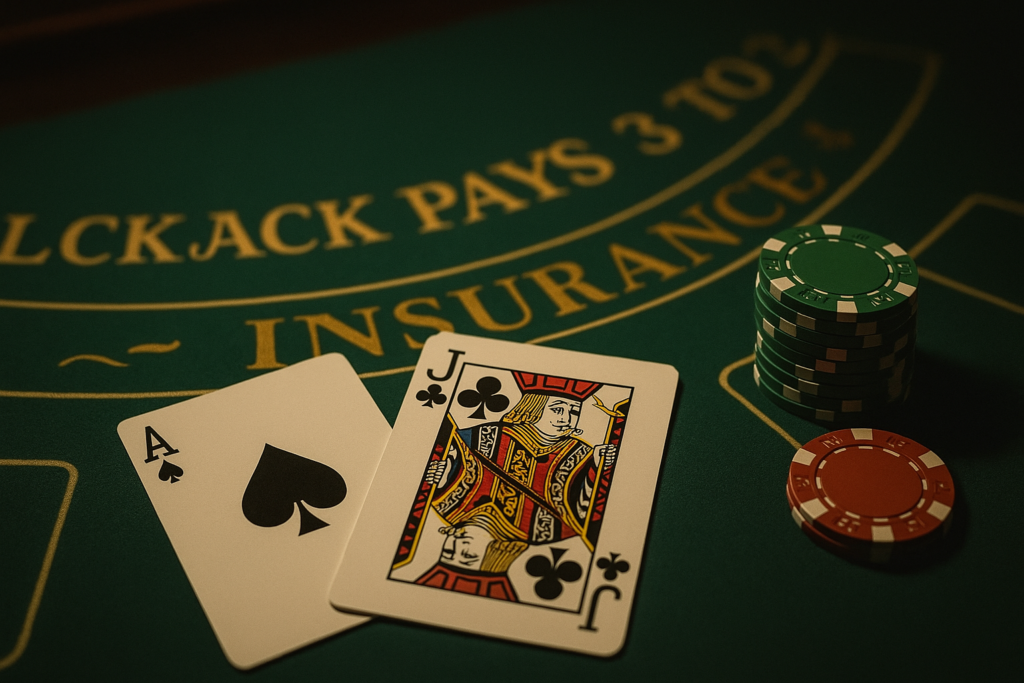
The safest casino game to start with — a practical guide for beginners Ask a dozen gamblers what the “safest” casino game is and you’ll get a dozen opinions. But if you mean “lowest expected loss, easy to learn, and playable at trustworthy casinos,” the research and experienced players point to one clear starter: blackjack played with basic strategy. That doesn’t mean it’s perfect for everyone, but it combines a very low house edge, straightforward decisions you can learn, and transparent rules you can check before you sit down. What “safe” should mean when you pick a casino game Before recommending a single game I like to define “safe.” For casino play, safety breaks into three practical dimensions: Financial safety (expected loss) — the game’s house edge and volatility. Lower house edge means lower long‑term loss per dollar wagered; lower volatility means your bankroll doesn’t spike up and down wildly. Cognitive/operational safety — simple rules, low chance of making accidental costly plays, and visible fair mechanics (no opaque paytables or buried side bets). Platform and consumer safety — you should be playing at a licensed, audited casino with secure payments, clear payout policies, and tools for responsible play. “Safest game” in this article scores well on all three: low house edge, easy-to-master basic decisions, and commonly available at regulated casinos. For the platform side, consult a checklist like the one at RotoWire’s casino safety guide, which highlights licensing, independent testing, encryption, and responsible‑play tools. Why blackjack is the safest place to start Blackjack stands out because skill matters, but the skill is finite and learnable. With a solid basic strategy you can reduce the casino’s edge to a fraction of other games. Low house edge: Guides consistently put blackjack’s house edge around 0.5–1% when you use basic strategy (and in some rule sets it can be as low as ~0.5%). Sources that compare casino odds put blackjack at the top of the list for best player chances — see Riverwind’s breakdown of casino odds and Rain Rock’s summary of games with strong odds. (Riverwind on best chances, Rain Rock on casino odds). Near 50/50 outcomes per hand: With proper play each hand is close to a coin flip—roughly a 49–51% win probability depending on rules and payouts—so your day‑to‑day results are more predictable than volatile slot sessions. Skill reduces loss: Blackjack’s basic strategy is a finite decision chart. Learn it, and you materially lower your expected loss versus random play. Unlike roulette or slots, where nothing you do changes the house edge, blackjack rewards study. New players also find blackjack approachable. Casinos and guides commonly recommend it as a top table game for beginners because the rules are straightforward and you make a small number of clear decisions each hand (hit, stand, double, split, surrender where allowed). For a readable beginner intro, see the Newcastle Casino guide on top games for new players: Best casino games for beginners. Important caveats: blackjack isn’t uniform Not all blackjack is created equal. The advertised house edge assumes “standard” rules and the use of basic strategy. Beware these rule changes that raise the house edge: 6:5 blackjack payouts on natural 21 instead of 3:2 — these increase the edge substantially. Restricted doubling/splitting rules (e.g., no double after split) that reduce player options. Continuous shufflers and some multi‑deck games can shift dynamics versus single‑deck, though skill still helps. Side bets (Perfect Pairs, 21+3, insurance) — most have much higher house edges than the main game and should be avoided for safety-focused play. Bottom line: check the rules and payouts before you play. If a table uses 3:2 payouts and allows standard doubling and splitting, blackjack will usually be the lowest‑edge game on the floor. Other safe starting games — alternatives if blackjack isn’t your style If you want other options, a few games also score well on safety when you stick to the simplest bets. Craps — safe if you stick to the Pass Line and simple bets Craps looks intimidating because of the dense table, but the basic bets are low‑edge and social. The Pass Line and Come bets, often combined with free Odds bets, are among the lowest‑house‑edge options on the floor. A number of odds breakdowns put the casino hold on these fundamental bets near 1% or less when played correctly (see basic comparisons in the Riverwind guide and odds breakdown videos). (Riverwind on house edge, YouTube odds breakdown). Pros: strong odds and a friendly, social vibe. Cons: the layout tempts inexperienced players into high‑edge center bets (proposition bets). If you try craps, limit yourself to Pass/Come and Odds until you understand the rest of the table. Baccarat — tiny decisions, low edge if you avoid the tie Baccarat is another low‑edge option for beginners who prefer no strategic study: choose Banker or Player and watch the cards. Expert odds analyses show Banker and Player bets have a casino hold around 1% (Banker is usually marginally better after the commission), while the Tie bet carries a very high house edge (reported as high as ~14% or more in some breakdowns). (YouTube odds breakdown). Pros: easiest to play and very low skill demands. Cons: table minimums are sometimes higher, and the Tie bet is a trap for unschooled players. Roulette — simple, visible odds (but fixed house edge) Roulette is one of the easiest games to understand. Outside bets—red/black, odd/even, high/low—offer almost coin‑flip outcomes. The downside is you can’t improve the house edge with skill; European single‑zero roulette has a house edge of about 2.7%, while American double‑zero is worse. Pros: instant familiarity and low stress. Cons: higher fixed edge than blackjack and no way to lower it through play. Guides for newcomers list roulette as a solid beginner choice for ease of use (see Newcastle’s beginner roundup). (Newcastle beginner guide). Video poker — excellent returns if you study paytables Video poker can deliver very high theoretical returns (often 99%+ on good machines with perfect strategy), making it attractive for methodical players.
Craps Practical Guide for Players Master the Table Flow

How to play craps: a practical, player‑friendly guide If you’ve watched a craps table — the energy, the shouting, the green felt — you might think it’s complicated. The truth is simpler: craps is a game built around two six‑sided dice and a repeating two‑phase round that beginners can master quickly. Start with the basic bets, learn the flow, and you’ll be part of the action without getting lost in the center‑table prop bets. I’ll walk you through the essentials, explain why each rule matters, and give practical tips to play smart and enjoy the table. How a craps round actually works (the flow that matters) Every round of craps is driven by two dice and one shooter — the player who rolls. The round begins with the shooter’s first toss, called the come‑out roll, and either ends on that roll or moves into the point phase until the shooter rolls the point again or sevens out. That simple loop is what you’ll see repeat over and over at the table. Two six‑sided dice are used and players take turns being the shooter. See a basic overview on Wikipedia’s craps overview. To be the shooter you must have a wager on either the Pass Line or the Don’t Pass before the come‑out roll; that’s standard at live tables — see the Hard Rock Cincinnati table rules for confirmation: Hard Rock Cincinnati: craps table rules. The dealer uses a puck to show the phase: when the puck is OFF, a come‑out roll is due; when it’s ON it marks the active point number. This detail is covered in house guides like the Potawatomi how‑to: Potawatomi’s how‑to play craps. Why this matters: once you understand “come‑out → point → resolution,” you’ll see how different bets resolve and why some wagers (like Pass Line) act like contract bets that stay on the table until the round finishes. The Pass Line and Don’t Pass: your two core bets If you start with nothing else, learn these two. They form the backbone of the game and are the safest place to begin. Pass Line: rooting for the shooter Place chips on the Pass Line before the come‑out roll. On the come‑out: 7 or 11 wins (even money). 2, 3, or 12 loses (that 12 on the Pass Line is called “craps”). 4, 5, 6, 8, 9, or 10 becomes the point and the shooter continues rolling. During the point phase, the Pass Line wins if the point repeats before a 7; if a 7 appears first (a “seven‑out”) the Pass Line loses and the round ends. Pass Line bets are typically contract bets: once the point is on you generally cannot remove or reduce that Pass Line wager until the round resolves (see casino rules at Hard Rock for that detail: Hard Rock Cincinnati: craps table rules). Practical example: if you put $10 on the Pass Line and 7 hits on the come‑out, you win $10 — even money. That straightforward payoff and the clear resolution rules are why many players start here. See WinStar’s beginner guide for a short primer: WinStar: how do you play craps. Don’t Pass: betting against the shooter The Don’t Pass wager is the mirror image of Pass Line — you’re effectively betting that the shooter will seven‑out. On the come‑out, 2 or 3 win for Don’t Pass; 12 is usually a push (tie); 7 or 11 lose. If a point is established, Don’t Pass wins if a 7 appears before the point repeats; if the point repeats first, Don’t Pass loses. One useful table rule difference: Don’t Pass bets can often be reduced or removed after a point is set, whereas Pass Line bets cannot — check the house rules where you play (Hard Rock explains this: Hard Rock Cincinnati: craps table rules). People who prefer steady, lower‑variance betting sometimes choose Don’t Pass — but be aware it can feel socially awkward because you’re betting against the shooter and the table’s momentum. Come and Don’t Come: multiple mini‑points for more action Once a point is on, the Come and Don’t Come bets let you establish independent “mini‑points” within the same shooter’s roll. They behave like Pass/Don’t Pass but are placed after the come‑out. Place a Come bet when the puck is ON. The next roll acts like a mini come‑out for your bet: 7/11 wins, 2/3/12 lose, any other number becomes your come point (dealer moves your chips to that number). Don’t Come is similar but resolves like Don’t Pass: 2/3 win, 12 pushes, 7/11 lose; if a come point is set, your bet wins if 7 hits before that number does. Why players use these: Come bets let you spread action across multiple numbers and create more chances to hit without waiting for a new shooter. They pair naturally with Odds bets (next section) — a common progression is Pass Line → Odds → Come → Odds. For a compact rules overview of Come/Don’t Come behavior, check the Venetian’s table guide: Venetian: craps basic rules. Odds bets: the best mathematical play at the table This is where the smart money goes. After a point (or a come point) is established you can back your line bet with an Odds bet — placed directly behind your Pass/Come or Don’t Pass/Don’t Come chip. The crucial fact: Odds bets pay true odds and therefore carry no house edge themselves. Why that matters: the casino’s built‑in advantage on Pass/Come wagers is what gives the house its edge; Odds bets pay exactly according to the mathematical probability of each number and so are the most favorable dollars you can put on the table. Because of that, most experienced players max their Odds when the bankroll and table limits allow. Two practical caveats: Individual casinos set how much Odds you can take (2x, 3x, 10x, etc.). Those limits vary by house and are usually printed on the table felt — the Riverwind strategy guide notes that payout schedules and maximum odds vary by
Blackjack Ace Values and How the Ace Changes Strategy

Blackjack Card Values: Why the Ace Changes Everything If you play blackjack, you already know an Ace feels different from a seven or a queen. But why does that single card have the power to reshape decisions, payouts and even the casino’s edge? In blackjack the Ace is the only card that can be worth 1 or 11, and that fluidity creates whole categories of hands, alters dealer behavior and underpins the game’s most valuable outcomes. This piece walks through the mechanics, the practical strategy consequences and the rule checks you should do before you sit down at a table. The baseline: how blackjack cards normally behave Before we focus on the Ace, it helps to be clear on what every other card does. In standard blackjack: Number cards (2–10) are worth their face value — a 2 is 2, a 9 is 9. (WinStar Casino: Blackjack Card Values, DraftKings Casino: Blackjack Card Values) Face cards (J, Q, K) are always worth 10. (WinStar, DraftKings) The Ace is the outlier: it can count as 1 or 11, depending on which value benefits the hand without busting. (Blackjack — Wikipedia) That last line is everything. Every non‑Ace card has a fixed numeric impact on your total; the Ace is the single card that can change its numeric identity mid‑hand to protect you from a bust or to create a stronger total. How an Ace actually behaves at the table In practice the Ace is evaluated automatically as 11 unless that would make the hand exceed 21, in which case it’s counted as 1. You don’t need to tell the dealer or “decide” each time — the hand is scored in the way that’s most favorable without busting. (Wikipedia, WinStar) Concrete example: if you’re dealt Ace + 6, the hand is a “soft 17.” It can be treated as 17 (Ace as 11) or 7 (Ace as 1). If you then draw a 10, the Ace automatically becomes 1 and your total becomes 17 — you don’t bust. That “shape‑shifting” is what gives the Ace its strategic clout. (See a simple primer at DraftKings’ explanation of card values.) Soft hands vs hard hands: the Ace creates “softness” in the game The Ace is responsible for one of the most important structural distinctions in blackjack strategy: soft hands versus hard hands. Soft hand: any hand that includes an Ace counted as 11 without busting. Example: Ace + 6 = soft 17. The key feature: you cannot bust on the next card while the Ace is still being taken as 11, because it can fall back to 1. (WinStar, DraftKings) Hard hand: a hand that has no usable Ace as 11 — either because there’s no Ace or the Ace must be counted as 1 to avoid busting. Example: Ace + 10 + 2 = 13 (the Ace must be 1). Hard hands carry fixed downside: every hit increases the bust risk. (WinStar) Why this matters for you: basic strategy treats soft totals and hard totals differently. With soft hands you can afford to be more aggressive — hit, double or even split more often — because the Ace buffers you against busting. With hard totals you’re closer to the cliff; a single high card can end the round for you. The Ace and natural blackjack (the high‑value two‑card 21) One of blackjack’s defining features is the “natural” or blackjack: an Ace paired with a 10‑value card (10, J, Q or K) on the first two cards. That two‑card 21 generally beats any other 21 and typically pays premium odds (traditionally 3:2), which is an important structural advantage for players when it occurs. (WinStar, Wikipedia) Two important practical notes about naturals: Some modern tables and electronic games have reduced the blackjack payout to 6:5 instead of 3:2. That change materially increases the house edge, so always check the posted payout before you play. (Wikipedia on payouts) If you split Aces and later make 21 with an Ace and a 10‑value card, most casinos treat that as a soft 21 — not as a blackjack — which usually pays only even money. The rule exists to limit how much value players can extract from split Aces. (Wikipedia) Because the Ace creates the very possibility of a two‑card 21, it’s at the center of the game’s payout design and the associated variance. How the Ace changes decisions at the table The Ace’s ability to switch values is not just a curiosity — it directly changes the optimal move in many common situations. Compare two hands that both total 17: Hard 17 (for example, 10 + 7): basic strategy almost always advises you to stand. Hitting is too likely to bust. (WinStar, Wikipedia) Soft 17 (Ace + 6): you often hit or even double against some dealer upcards. Because the Ace can drop to 1, you have room to improve the hand without the immediate prospect of a bust. (WinStar, BetMGM blog on playing an Ace) Another common class of decisions: doubling on soft totals. Hands like Ace+5, Ace+4 or Ace+3 are often doubling candidates versus weak dealer upcards because: The Ace makes the original hand “safe” — you can’t instantly bust on the next card. Many possible draws convert the hand into a powerful hard total (18–21) once the Ace drops to 1, producing favorable expected outcomes. (BetMGM) Practical takeaway: when you see an Ace in your two‑card starting hand, you’re often in the category where the recommended play is different and more aggressive than a similar numeric total without an Ace. That’s why you’ll find separate basic strategy charts for soft and hard totals. Dealer rules, the Ace and house edge Dealers use the same Ace evaluation as players: 11 unless that busts, then 1. Where the Ace changes the casino’s mathematics is in how rules treat soft totals for the house. Many casinos specify whether the dealer must stand on soft 17 (S17) or hit soft 17 (H17). That distinction exists because soft
Can You Make Money Online Playing Poker? A Realistic Guide

Can you make money online playing poker? A realistic guide for players Short answer: yes — but not easily, and not for most people. If you’re serious about turning an online poker habit into income, you need a clear plan, patience, and an honest view of the numbers and risks. The research and community consensus — from academic studies to industry reporting and coaching advice — shows that skill matters, a small minority of players are long‑term winners, and the path that’s most likely to be sustainable is disciplined, volume‑driven cash‑game play rather than chasing tournament glory. What the evidence actually says: skill matters, but winners are rare Two pieces of the puzzle are especially important. First, an academic analysis of online ring games demonstrated a measurable skill component — across sufficient hands, skilled players tend to outperform weaker ones and skill can dominate luck over a “moderate duration” of play. That’s not a claim that luck disappears, only that skill is a meaningful factor in outcomes when volume is high and players are competent: see the peer‑reviewed study at the National Institutes of Health archive. Second, industry reporting and player surveys emphasize how few people are consistently profitable. ESPN’s reporting summarized estimates that only around five percent (or fewer) of online poker players are long‑term winners; most recreational players either break even or lose money when you factor rake and time investment. The ESPN piece provides a useful, if sobering, context for expectations: ESPN’s analysis of poker profitability. Those two facts together explain the common experience: you can learn to beat many casual players, but turning poker into reliable income requires moving far past the recreational level and competing in tougher games where small edges are the difference between profit and loss. Cash games vs. tournaments: which is the better route to steady income? Beginners and serious grinders usually face the same choice: focus on cash games (ring games) or try to make money in tournaments (including multi‑table and MTTs). The research and coaching consensus point toward cash games as the more stable, scalable option for steady income. Why? Cash games let you control stakes, buy‑ins, and session length, so your variance is lower compared with the huge roller‑coaster swings of tournaments. A coaching article that looked at realistic monthly income argued that low‑stake live players aiming for about $2,000/month face a tough but achievable challenge — and that approach maps even better online because of the volume available: Conscious Poker on realistic earnings. Tournaments can pay spectacularly well in a single event, but they’re high variance: big ups (a life‑changing score) and long stretches of nothing. If your goal is regular, predictable income, cash games are usually preferable. If you can tolerate variance and enjoy the hunt for big scores, tournaments remain an option — but you must budget for long periods without payouts. How winners actually make money: the core success drivers There are four non‑negotiable ingredients that separate the small group of winners from the majority who don’t make it: Study and skill development: Learning theory, solvers, hand reading, and exploitative adjustments. The academic work referenced earlier confirms that skill accumulation produces measurable edges over time. Game selection: Picking tables and opponents where you have an edge — this is one of the fastest ways to improve results without changing your technical game. Bankroll management: Properly sizing buy‑ins to your bankroll prevents destructive downswings from busting you out of the pool where you can learn and grind. Volume and consistency: Online poker rewards players who put in many hands against weaker opponents. The more hands you play (with good game selection), the more your edge compounds. Community discussion reflects this. Forum veterans often report that, in achievable spots, online poker can still produce hourly rates in the $20–$30 range — but that’s not a universal or guaranteed figure, and the tougher overall environment in recent years makes sustaining those numbers harder: see a typical thread on player expectations at TwoPlusTwo’s discussion. Live vs. online: which is better for learning and making money? Many players debate whether to learn in live games or online. The tradeoffs matter: Online learning advantages: You see many more hands per hour, can multi‑table to increase volume, and can practice specific spots with tools and trackers. Coaching voices argue that online play is better for learning because of the pace, small stakes availability, and ability to iterate quickly; here’s an example discussing those points: a video on online vs. live learning. Live learning advantages: Live games may be softer in some markets and allow you to exploit tendencies not present online (timing tells, bet sizing patterns), but you’ll see far fewer hands and scaling income is harder. Bottom line: start online if you want rapid improvement and the ability to scale, and don’t expect live games to be an easy shortcut to profit. Both formats require study, but online gives you the most efficient learning curve — provided you use tracking tools and review your play. Practical path: a realistic framework to try If you want a practical, step‑by‑step approach to test whether you can make money online, consider this framework — it’s grounded in the findings and community experience from the research. 1) Establish clear goals and time horizon Decide whether you want to be a hobbyist who occasionally pockets winnings, a part‑time grinder supplementing income, or a full‑time professional. The time, bankroll and mental preparation required scale with your ambition. The $2,000/month target discussed in the coaching piece is a reasonable early benchmark for someone trying to move beyond hobbyist status at lower stakes: Conscious Poker’s analysis. 2) Start at low stakes, focus on cash games Begin where mistakes are inexpensive. Cash games provide the most predictable path to a steady win rate. Low‑stakes tables allow you to practice bankroll management and learn to beat the game without catastrophic swings. 3) Measure everything Track hands, win rates, sessions, opponents, and leaks. The academic study showed that measurable skill produces
Maximizing Value on Online Slots with RTP Volatility Bonuses

How to win at online slots every time — and why that’s not possible Short answer: you can’t win at online slots every time. If somebody promises that, treat it like a sales pitch, not advice. Modern slots are built on random number generators (RNGs) and an in‑built house edge; no bet sizing trick, “pattern,” or timing hack flips that math. That said, as a player you’re not helpless — you can choose better games, protect your bankroll, and squeeze extra value from bonuses and loyalty programs so you lose more slowly and give yourself more chances to hit meaningful wins. In this guide I’ll explain what does and doesn’t work, why it matters, and practical steps you can use the next time you sit down at an online slot. 1. The hard reality: why “win every time” is impossible If you want a place to stop believing in guaranteed slot systems, start here. Online slots are chance machines; outcomes are determined by RNGs so every spin is independent and unpredictable. There’s no memory of past spins and no “due” machine waiting to pay out (sources: PokerNews and Turning Stone). The math — expressed as RTP (Return to Player) — is the engine behind everything. RTP is a theoretical long‑run percentage of all wagered money a slot will return; commonly you’ll see RTPs in the mid‑90s, such as 94–97% (sources: PokerNews; FTW/USA Today). Because RTP is baked into the game, no betting system (flat bets, Martingale variants, volatility targeting) can change the long‑term return. As PokerNews puts it bluntly: “No, there is no guaranteed way to win at online slots… There are no special strategies you can deploy to guarantee you win more.” You can have hot runs and you can bank big prizes, but over a large number of spins the math converges to the RTP and the casino’s edge is realized (sources: PokerNews; Turning Stone). Why this matters: accepting this reality protects you from chasing losses and falling for dubious “systems.” Any honest article or operator (MGM, Turning Stone) will say the same: understand the game, manage your money, and use promotions — don’t hunt for a mythical guaranteed method (sources: MGM; Turning Stone). 2. What you can actually control: game selection, RTP and volatility “Can’t win every time” doesn’t mean “can’t play smart.” The most impactful levers you control are which game you pick and how its RTP and volatility align with your goals. RTP matters. Return to Player is the clearest, measurable edge you can influence. Guides aimed at players recommend targeting slots with RTP ≥ 96% as a baseline for “good” games (sources: PokerNews; YouTube slot guides; FTW/USA Today). To illustrate: a 94% RTP means a 6% house edge; a 97% RTP means a 3% house edge — that’s half the expected loss over the long run. Choosing higher RTP doesn’t guarantee wins, but it lowers your expected losses per dollar wagered, which is the only mathematical advantage a recreational player can choose (source: PokerNews). Match volatility to your goals. Volatility (aka variance) describes hit frequency and payout size. Low‑volatility slots pay small wins more often and are better if you want steady activity and longer sessions. High‑volatility slots offer rarer but larger payouts and can blow through a bankroll quickly. If your objective is to “see wins more often,” choose a low‑volatility, high‑RTP game. If you want a shot at a life‑changing jackpot and accept longer droughts, high volatility is the tradeoff (sources: PokerNews; YouTube slot guides; FTW/USA Today). Practical tip: regulated online casinos and review sites often let you filter games by RTP and indicate volatility. Use those filters — they are a simple, no‑cost way to improve the value of every dollar you wager. 3. Bankroll and bet sizing: what these strategies actually do Many videos and articles talk about bet sizing strategies. Important caveat: none of them change RTP. What they do is control risk, shape session variance, and (importantly) influence your behaviour — which matters for how often you stop, restart, and avoid chasing losses. Flat betting. Choosing a fixed stake per spin and sticking to it is common, sensible advice. It won’t increase your expected winnings, but it makes variance predictable and helps prevent emotional staking decisions that lead to bigger losses (source: YouTube slot guides). Reverse Martingale (press the win). This is the “parlay winners” idea: when you win, increase the stake to press the hot streak; when you lose, return to base. It can be fun and produce big short‑term swings, but the RTP is unchanged; you’re just concentrating variance into fewer, larger bets (source: PokerNews; YouTube). Ticket banking / win locking. One practical and behaviourally strong guideline is: whenever you win more than your original stake, cash out the excess and play on with only the base bankroll. This doesn’t create a mathematical advantage, but it protects winnings from being given back to the machine — and that’s often the difference between walking away a winner and going home down (source: popular slot strategy videos; MGM). Session bankrolls & stop‑loss rules. Operators like MGM recommend splitting your gambling budget into session bankrolls, each with time and loss limits, and quitting when limits are hit (source: MGM). A simple rule: play with 0.5–1% of your session bankroll per spin. That keeps you in the game longer and reduces the chance you’ll chase losses by increasing stakes. Again: these strategies don’t beat the house — they control how fast you get to the house edge. 4. Squeezing extra value: bonuses, free play and loyalty If you’re hunting for “impossible” edges, the one place you can actually achieve positive or closer‑to‑break‑even expectancy is through promotions and comps. Online bonuses and free spins. Welcome bonuses, cashback offers, and free spins extend your playtime and, when combined with high‑RTP, low‑volatility games, can soften the effective house edge for that session (sources: PokerNews; YouTube slot guides; FTW/USA Today). Always check wagering requirements and game contribution limits: the bonus only helps if