
888 Casino 2026 Review A Clear-Eyed Look at the Brand

888 Casino 2026 review — a clear-headed look at the brand, the good, and the pitfalls If you’ve been around online casinos for a while, 888 is a name you recognize instantly. In 2026 the brand continues to trade on decades of market presence and strong regulatory credentials, but player sentiment has soured in recent years — mainly around bonuses, cashouts and support. This review walks through the facts, why they matter to you at the tables or slots, and practical steps to reduce friction if you decide to play. At a glance: what the evidence says about 888 Casino in 2026 Put simply: 888 Casino is legitimate and established, but not above criticism. Multiple recent reviews describe 888 as a long-running operator licensed for regulated markets, which is an important baseline for safety and fairness. At the same time, user-facing review platforms show poor sentiment — Trustpilot ratings in 2026 sit in the low range (commonly cited between about 1.3/5 and 2.6/5) with recurring complaints centered on bonus terms, slow withdrawals and lengthy verification processes. That split — solid editorial scores versus weak public sentiment — is the recurring theme you’ll see below. For context from industry and review sources, see a representative editorial profile at TheGambleDude’s 888 Casino page and a consumer-facing review at The Sun’s 888 Casino review. For the raw user feedback snapshot, look at 888’s Trustpilot page. Independent comparison and review sites such as Casino.org’s review and JustGamblers’ review help fill in editorial scores and recurring complaint themes. Legitimacy, licensing and what that actually means for players One of 888’s clearest strengths is longevity and the regulatory framework under which it operates. Being licensed by reputable regulators (which multiple reviews cite) means that the operator is subject to rules around fairness, player protection, anti-money-laundering checks and complaint-handling standards. That’s important because it reduces the risk of rogue behavior you might find at unlicensed sites. Why this matters: licensing doesn’t guarantee a perfect experience — it sets minimum expectations. If you disagree with a payout decision or feel the site mishandles a dispute, a regulator gives you a formal avenue of complaint. Editorial reviews generally treat that regulatory standing as a major tick in the “pros” column for 888, even when they flag operational weaknesses. Games, platform and mobile usability — where 888 still scores well Across the board reviewers compliment 888 for its game selection and mobile experience. That’s not trivial. For many players the variety and polish of the client determine how long they stick around: 888’s catalog covers slots, table games and branded content, and the platform has been refined for mobile play over many years. What that means for you: expect a dependable selection of mainstream slots and table games and a smooth mobile interface for routine sessions. If your priority is variety and a familiar, stable lobby experience, 888 remains competitive. Editorial sites point to strong product depth and a usable mobile app/site as consistent positives. Bonuses and promotions — valuable but often friction-filled Bonuses are where the satisfaction gap often begins. Multiple sources and user reports show that players frequently find bonus terms unclear or unfavourable in practice. Complaints include confusion about wagering requirements, eligible games for bonus play, and how bet limits interact with Wagering-Through conditions. Why this matters: bonuses can boost your playtime and bankroll, but unclear or punitive terms turn a “free” offer into a headache — and occasionally a source of withheld funds when withdrawal conditions aren’t satisfied or interpreted differently by the operator. Practical tips Read the full T&Cs before you claim: that sounds obvious, but a surprising number of disputes start because a player didn’t note a key clause (game weighting, max bet while bonus active, or a prohibited game category). Prefer no-wager or low-wager promos if you want straightforward play: if available, these avoid complex conversion steps. Track your play-through: keep a quick log or screenshot wins/losses when using a bonus so you have a record if support challenges your claim later. Consider bonus-free play: if you value fast, predictable withdrawals more than bonus value, playing without offers reduces dispute vectors. Sources that highlight these problem areas include player-facing reviews and editorial summaries — for examples, see coverage on JustGamblers and the editorial commentary collected by TheGambleDude. Payments, withdrawals and KYC — recurring pain points Withdrawal speed and verification friction are the most consistent practical complaints in 2026. Users commonly report slow payouts that stretch beyond initial timelines, plus protracted Know Your Customer (KYC) verifications that block cashouts. Those kinds of problems show up repeatedly on public review channels and are the biggest contributors to poor Trustpilot sentiment. Why this matters: even at a regulated operator, the withdrawal process is often where player expectations and operator policies collide. It’s typically a function of payment method, internal compliance checks, and whether the player pre-emptively satisfied KYC requirements. Practical steps to reduce risk of delays Verify early: upload ID and proof-of-address documents as soon as you sign up. That removes a major cause of delay when you request a cashout. Match deposit and withdrawal methods where possible: many operators require you to withdraw to the original deposit method first; using a bank transfer or e-wallet with immediate verification can reduce friction. Keep clear records of deposits: screenshots of deposit confirmations and payment receipts can be useful if a support rep asks for proof. Be prepared for reasonable checks: high-value wins routinely trigger enhanced due diligence; it’s standard practice rather than a red flag on its own. For readers who want to explore how these issues have affected other players, user feedback on Trustpilot’s 888 page gives a raw view of disputes and response times. Customer support and player sentiment — why the editorial score and Trustpilot don’t match Here’s the headline tension: editorial reviews tend to score 888 in the “solid but not exceptional” range (some sites report scores around the 7.2–7.5/10 band or roughly 4.3/5 on some platforms). Meanwhile, Trustpilot and other consumer-review
20 Most Popular Online Casino Games Right Now Globally

The 20 Most Popular Online Casino Games Right Now — What Players Are Actually Playing If you spend any time in casino lobbies, streamer chats or operator “most played” lists, one truth jumps out immediately: slots dominate. Still, the modern online casino ecosystem is more varied than ever — big branded slots, live-dealer classics, TV-style game shows and a new wave of fast-paced “crash” games all fight for attention. Below I take you through the 20 titles and types topping global engagement charts today, explain why they matter, and give practical tips for choosing the right games for your bankroll and play style. The 20 most-played online casino games — a quick tour The list below pulls together multiple industry rankings and play-data sources (see the linked reports for the underlying datasets). I’ll name each game, give the headline ranking and explain what makes it sticky for players. Gates of Olympus (Pragmatic Play) — Consistently ranked #1 globally in recent industry lists and top-played slot charts. A high-volatility “pay-anywhere” slot with multipliers and free spins; extremely popular across Brazil, Germany and the UK. For the underlying ranking, see the Business of iGaming global ranking. Sweet Bonanza (Pragmatic Play) — Ranked #2 in recent engagement data. Its cluster mechanics, tumbling reels and bonus-buy interest make it an evergreen candy-themed hit on operator lobbies and streamers’ rotations. Gates of Olympus 1000 (Pragmatic Play) — A higher-volatility sequel that ranks #3 in global popularity, especially strong in Brazil, Germany and Denmark. Gates of Olympus Super Scatter (Pragmatic Play) — Another Gates-branded release that modernizes scatter/bonus dynamics; sits at #4 in 2026 lists as demand for the franchise continues. Big Bass Splash (Reel Kingdom / Pragmatic) — #5 in global 2026 lists. The “fishing” theme and collection bonus features make it a staple in the UK, Germany and Brazil. European Roulette (RNG versions) — #6 overall in global rankings for a branded RNG release (Evoplay in one dataset). Roulette is the most-played non-slots online table game; regulator research shows virtual roulette is used by 36% of surveyed UK online players, underscoring its enduring appeal (Gambling Commission UK). Big Bass Bonanza (Reel Kingdom / Pragmatic) — #7 on 2026 lists and part of the high-visibility Big Bass series. Live European Roulette (various suppliers) — #8 globally. Live roulette is one of the most-played live dealer games; UK data record significant live-roulette participation among non-slot players (Gambling Commission UK). Live Speed Roulette — #9. The “speed” format shortens spin cycles, increasing hands-per-hour and appealing to action-focused players. Sugar Rush (Pragmatic Play) — #10. A high-volatility grid slot that ranks among the top-played slots of 2025, particularly in Brazil and Germany. Sugar Rush 1000 (Pragmatic Play) — #11. A “1000” series title built for bonus-buy and super high-volatility demand. Jelly Express (Pragmatic Play) — #12. A newer Pragmatic slot that demonstrates how large provider networks can dominate global visibility. Aviator (Spribe) — #15 in recent global lists and the leading example of the “crash” genre. Extremely popular in Brazil and India and a defining title for that emergent category. Buffalo King Megaways (Pragmatic Play) — #16. A Megaways-powered entry in the longstanding Buffalo family. Luxe Blackjack (Winfinity and others) — #17. Live blackjack variants, including “Luxe” branded tables, remain a top card-game choice; live blackjack is nearly universal across operators. Lightning Roulette (Evolution) — One of the most recognisable live innovations. Ranked as the #1 live dealer game in some 2025 datasets thanks to its RNG lightning multipliers layered onto roulette mechanics (iGaming Expert analysis). Crazy Time (Evolution) — A leading live game show. CasinoRank analysis shows it among the most-played live titles, with average hourly players per day that can exceed hundreds of thousands on aggregate streams and tables (iGaming Expert). Infinite Blackjack (Evolution) — A scalable live blackjack product that ranks highly among live dealer titles; its unlimited-seats model helps operators handle peak demand. Baccarat (live and RNG) — While specific baccarat titles seldom top casual rankings, baccarat as a category is core to online casinos and exceptionally important in Asian and high-roller markets. It’s widely available across operators (SilentBet data). Slots (as a category) — The anchor of online casinos. Slots account for roughly 80% of online casino sessions globally and are effectively universal — research finds 100% availability of slots among analyzed casinos, and slots dominate search behaviour in regulated US markets (CasinoContext guide; BetMGM search-data report). Why so many slots — and why a handful of brands rule lobbies Look at the 20 items above and you’ll see a pattern: a huge share are Pragmatic Play titles. That’s not accidental. Modern slot popularity is driven by three factors: Distribution and placement. Big providers supply dozens of markets and enjoy preferred lobby placement and promotional deals with operators. When a provider gets featured spots, its titles get played more. Stream-friendly features. Mechanics like tumbling reels, bonus buys and large multipliers create highlightable “moments” for streamers and content creators — and that feeds player curiosity. Volatility segmentation. Operators stock low-, medium- and high-volatility versions of the same franchise (the “1000” or “Super Scatter” suffixes). That lets players chase either steady play or big-bonus potential while staying inside the same familiar brand. It’s also worth emphasizing that slots aren’t a single thing. The category spans quick-hit 3-reel classics, cinematic branded slots, Megaways and grid mechanics. Because slots generate about 80% of sessions, operators prioritize lobby real estate and marketing spend toward the few top-performing titles, which creates a feedback loop: more exposure → more plays → higher rank. Live dealers and game shows: renewed momentum Live casino has become a legitimate second pillar to slots. Live tables and game-show products now appear in nearly every operator’s catalogue and account for large volumes of play during evenings and weekends. Two trends stand out: Game-show innovation. Titles like Crazy Time and Lightning Roulette combine TV-show pacing with big-bonus potential. CasinoRank-style analyses and operator reporting show these games among the most-played live products globally — Crazy Time’s
UK gambling sponsorship ban reshapes sports partnerships

UK clubs face regulator ban on unlicensed casino sponsorships — what it means for clubs, fans and the gambling sector If you follow football, rugby or motorsport sponsorships you’ve probably noticed a recent trend: offshore casinos, crypto-gambling brands and white‑label operators plastering themselves across shirts, stadium hoardings and naming rights. The UK government has now moved to close that chapter. A Department for Digital, Culture, Media and Sport (DCMS) consultation proposes making sponsorships from gambling operators that do not hold a UK Gambling Commission licence illegal — and criminalising those deals from 2027–28 at the latest. That’s a big shift. It isn’t just about logos on shirts: the proposal carries potential criminal liability for clubs and officers, redraws the commercial landscape for teams reliant on gambling income, and signals a wider push against offshore and crypto casino marketing aimed at UK audiences. Below I unpack the proposals, how enforcement works today, what clubs and sponsors need to be thinking about now, and practical steps to manage the transition — all based on government, regulator and news reporting. What exactly is being proposed? The heart of the proposal is straightforward: prohibit sponsorship and advertising arrangements with gambling operators that do not hold a UK Gambling Commission licence, even if their services are not accessible to consumers in Great Britain. Ministers have framed the move as closing a marketing loophole that has allowed offshore and crypto casinos to gain mainstream exposure while claiming to block UK access. The government set out the plan in its consultation paper and public announcement. The DCMS is seeking views on a broad ban that would cover sports sponsorship inventory and many types of commercial relationships. You can read the consultation in full at the government’s consultation page: Consultation on banning unlicensed gambling sponsorship. The official announcement explaining the crackdown is available here: Government to crack down on gambling operator sport sponsorship. Why it matters: sponsorship is not only marketing; for many clubs it’s major revenue — principal partners, front-of-shirt deals, stadium rights and LED inventory are high-value assets. Barring a whole category of potential partners changes the pool of buyers and, for some clubs, forces rapid renegotiation or replacement. The existing loophole and how operators have exploited it Under current UK rules unlicensed operators can — with conditions — sponsor UK clubs so long as their gambling services are not accessible to Great Britain consumers. The Gambling Commission has permitted such sponsorships where clubs can demonstrate the sponsor’s sites are blocked to UK customers “by any means”, including measures to prevent access via VPNs. The regulator’s guidance on sports sponsorship and advertising explains the boundary: advertising unlawful gambling is already an offence under section 330 of the Gambling Act 2005, and licenceholders need to take care when dealing with unlicensed brands. See the Gambling Commission’s guidance here: Sports sponsorship and advertising — Gambling Commission. That conditional permissiveness created a loophole: offshore casinos and crypto platforms could buy prime exposure — front-of-shirt, stadium signs, pitch‑side LED — while asserting they did not and could not serve UK players. In practice, critics and investigators have questioned whether those blocks were adequate, and there are reports of brands continuing to serve UK customers after losing a licence. The Guardian laid out the government’s reasons for closing that gap: Unlicensed casinos: UK considers ban on sports team sponsorship. Why it matters: clubs that signed deals under the current interpretation may have assumed they were compliant. A new ban removes that legal hedge and converts previously lawful commercial activity into a potential criminal offence once the law changes. Scope and timing — what would be covered and when The DCMS consultation envisages a broad ban. The scope explicitly includes: Kits: front-of-shirt, sleeve and training-wear sponsorship; Stadium and venue inventory: naming rights, stand branding, internal/external signage; Matchday and in-stadium advertising: pitch‑side hoardings and related visibility. Government material makes clear the intention is to bar “unlicensed” operators — which the consultation defines in terms of lacking a Gambling Commission licence — from buying mainstream UK sports sponsorship inventory. Notably, the initial proposals stop short of regulating online-only partnerships (affiliate deals, web content and digital-only marketing), though ministers signalled they may consider those measures later. The consultation is an eight‑week exercise. The government has indicated a firm backstop: the ban will be in force no later than August 2028, and could be implemented as early as August 2027. That timeline sits alongside other changes: the Premier League has already announced a voluntary removal of front-of-shirt gambling sponsorship by the end of the 2025–26 season, but the DCMS proposals are wider in scope and would explicitly target unlicensed operators. For the consultation details see: Consultation on banning unlicensed gambling sponsorship. Why it matters: clubs with long-dated sponsorship contracts that run past the implementation window face legal and commercial complexity. They may need to negotiate amendments, seek early terminations, or find replacement partners — all of which can be costly and time-sensitive. Enforcement risk now — criminal liability and regulator guidance Even before any new law passes, enforcement pressure has been mounting. The Gambling Commission has warned that sports organisations engaging with unlicensed brands risk committing the offence of advertising unlawful gambling under section 330 of the Gambling Act 2005. The regulator has written to clubs to underscore that officers may be personally liable in particular circumstances. Press reporting and regulator commentary show the stakes. Sky News reported that some casinos sponsoring Premier League clubs continued to accept UK customers despite losing UK licences, and that the Gambling Commission had warned clubs that officers “may be liable to prosecution” if they promote unlicensed operators serving UK consumers. Those warnings referenced potential penalties including imprisonment and unlimited fines — penalties that make the issue much more than a regulatory headache. See Sky’s reporting here: Premier League clubs at risk of legal action over unlicensed casino sponsors — Sky News. Why it matters: criminal exposure changes behaviour. Directors and officers who might once have approved sponsorship deals
Safest Online Blackjack Play A Practical Guide for Players

Safest Way to Play Blackjack Online: A Practical, Player-Centered Guide Blackjack is one of the friendliest casino games for players who want to combine entertainment with a real chance to influence their results. But the online environment adds layers of risk you don’t face at a brick-and-mortar table: cybersecurity threats, unclear licensing, bad rule sets and predatory bonus terms. The safest approach to playing blackjack online is therefore twofold: protect your money and identity, and play the game in a way that minimizes the house edge. Do both and you turn a risky pastime into a controlled one. Below I walk through the exact steps I recommend—practical checks you can do in five minutes, game choices that actually matter, and bankroll rules that prevent a fun session from turning into a costly habit. I’ll also flag the warning signs to walk away from and include links to the authoritative resources cited in the industry guidance I used. 1. Start with the right operator: licensing and reputation The single biggest safety decision you make is where you deposit your money. A regulated, licensed casino means there’s an independent body overseeing fairness, the handling of player funds and dispute resolution. Reputable regulators to look for include the UK Gambling Commission and the Malta Gaming Authority—these are the names operators often display on their sites because they matter. Practical checks: Find the license badge in the site footer, click it and verify the license number on the regulator’s public register. Look for a physical address and clear contact channels (live chat and email). Operators who hide contact details are a red flag. Read recent player reviews and any regulator enforcement action against the operator. If you want a short primer on this first step, see the “How to safely play blackjack online” guidance compiled by CasinoFlash, which walks through license and verification checks in detail: How to safely play blackjack online (CasinoFlash). The same themes—license, transparency and oversight—are echoed across industry commentary including this practical recap from CasinoLife Magazine: Key takeaways: how to stay safe playing blackjack online (CasinoLife Magazine). 2. Lock down your security: data, devices and payments Once you’ve chosen a licensed operator, your next job is to make sure your account and money can’t be trivially compromised. Online casinos process sensitive data (personal details and payments), so basic security hygiene is essential. What to check and why it matters: SSL and HTTPS: Look for “https://” and the padlock in your browser address bar. That indicates SSL/TLS encryption between your device and the casino’s servers, which prevents casual interception of credentials and payment details. This is the simplest baseline check and it matters—no padlock, no trust. Secure payment options: Use payment methods with buyer protection and fraud monitoring (e.g., reputable e-wallets or card providers). These methods add a layer between your bank account and the casino and can simplify disputes. Strong, unique passwords and 2FA: Use a password manager to generate a distinct password for each gambling site and enable two-factor authentication (2FA) if the casino offers it. This prevents credential stuffing attacks where credentials from a breached site are reused. Avoid public Wi‑Fi and unsafe apps: Don’t log into gambling accounts on public networks unless you’re using a private VPN. Only install casino apps from official app stores or play via the operator’s website. Malicious copies can harvest credentials. For a deeper look at casino cybersecurity basics and how operators recommend safeguarding winnings and accounts, the BMM Magazine piece on cybersecurity in online blackjack is a helpful read: Cybersecurity in online blackjack (BMM Magazine). The practical safety checklist at Info4Gambling also summarizes device and account protection steps you can implement immediately: 7 essential safety measures for online blackjack (Info4Gambling). 3. Choose the right game and rules: small differences, big impact Not all online blackjack is created equal. Rule differences and side bets dramatically change the expected return to the player—sometimes by more than the effect of strategy errors. If you want the “safest” financial play, choose variants and tables that give you the best mathematical chance over the long run. Key rule considerations: Payout for a natural blackjack: Look for tables that pay 3:2 on a natural blackjack. Avoid 6:5 blackjack tables—these are materially worse for players and increase the house edge significantly. Number of decks: Fewer decks usually slightly favor the player, all else equal. Don’t obsess over decks, but prefer lower-deck counts if the rules are good. Dealer behavior and surrender: Dealer standing on soft 17 (S17) is better for the player than hitting on soft 17 (H17). If late surrender or early surrender is offered under fair conditions, that can reduce the house edge further. Avoid side bets unless you understand them: Side bets carry a much higher house edge and are generally designed to be profitable to the operator. If your goal is a safe financial approach, stick to main-hand play using basic strategy. Casino operators sometimes advertise “fancy” blackjack with side bets or 6:5 payouts ostensibly to attract casual players. The practical takeaway: read the paytable and rules before you ante up. For a basic walkthrough of favorable blackjack rules and why they matter, NJ.com’s blackjack guide covers the rule differences that affect strategy and expected returns: How to play blackjack (NJ.com). 4. Play with the math: use basic strategy and sensible bet sizing If you want to minimize the house edge—i.e., take the safest financial approach during play—you must follow basic strategy. Basic strategy tells you the mathematically optimal decision for every two-card player hand versus the dealer’s upcard, given the rules and deck count. It doesn’t guarantee a win, but it reduces the house edge to the lowest possible figure for simple, non-counting play. Practical points: Use a basic strategy chart: Before you play for real money, have a chart handy (or use a legal trainer app). Online, you can consult basic strategy charts adapted to the exact rule set you’re playing. Avoid emotional deviations: Doubling down or splitting at the wrong
Blackjack With Basic Strategy Is the Safest Starter
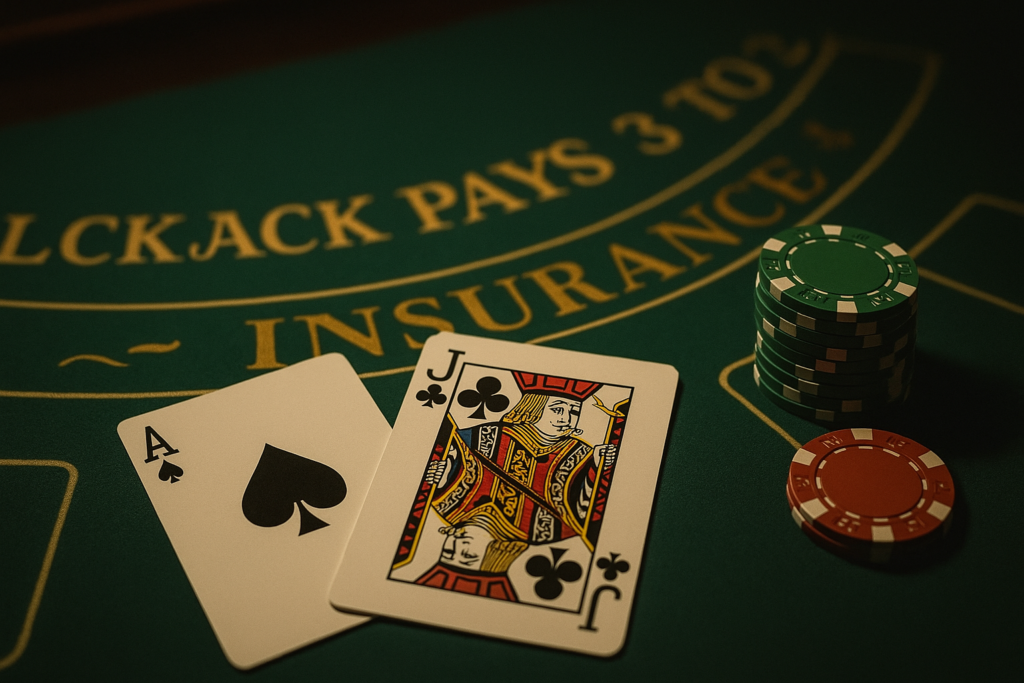
The safest casino game to start with — a practical guide for beginners Ask a dozen gamblers what the “safest” casino game is and you’ll get a dozen opinions. But if you mean “lowest expected loss, easy to learn, and playable at trustworthy casinos,” the research and experienced players point to one clear starter: blackjack played with basic strategy. That doesn’t mean it’s perfect for everyone, but it combines a very low house edge, straightforward decisions you can learn, and transparent rules you can check before you sit down. What “safe” should mean when you pick a casino game Before recommending a single game I like to define “safe.” For casino play, safety breaks into three practical dimensions: Financial safety (expected loss) — the game’s house edge and volatility. Lower house edge means lower long‑term loss per dollar wagered; lower volatility means your bankroll doesn’t spike up and down wildly. Cognitive/operational safety — simple rules, low chance of making accidental costly plays, and visible fair mechanics (no opaque paytables or buried side bets). Platform and consumer safety — you should be playing at a licensed, audited casino with secure payments, clear payout policies, and tools for responsible play. “Safest game” in this article scores well on all three: low house edge, easy-to-master basic decisions, and commonly available at regulated casinos. For the platform side, consult a checklist like the one at RotoWire’s casino safety guide, which highlights licensing, independent testing, encryption, and responsible‑play tools. Why blackjack is the safest place to start Blackjack stands out because skill matters, but the skill is finite and learnable. With a solid basic strategy you can reduce the casino’s edge to a fraction of other games. Low house edge: Guides consistently put blackjack’s house edge around 0.5–1% when you use basic strategy (and in some rule sets it can be as low as ~0.5%). Sources that compare casino odds put blackjack at the top of the list for best player chances — see Riverwind’s breakdown of casino odds and Rain Rock’s summary of games with strong odds. (Riverwind on best chances, Rain Rock on casino odds). Near 50/50 outcomes per hand: With proper play each hand is close to a coin flip—roughly a 49–51% win probability depending on rules and payouts—so your day‑to‑day results are more predictable than volatile slot sessions. Skill reduces loss: Blackjack’s basic strategy is a finite decision chart. Learn it, and you materially lower your expected loss versus random play. Unlike roulette or slots, where nothing you do changes the house edge, blackjack rewards study. New players also find blackjack approachable. Casinos and guides commonly recommend it as a top table game for beginners because the rules are straightforward and you make a small number of clear decisions each hand (hit, stand, double, split, surrender where allowed). For a readable beginner intro, see the Newcastle Casino guide on top games for new players: Best casino games for beginners. Important caveats: blackjack isn’t uniform Not all blackjack is created equal. The advertised house edge assumes “standard” rules and the use of basic strategy. Beware these rule changes that raise the house edge: 6:5 blackjack payouts on natural 21 instead of 3:2 — these increase the edge substantially. Restricted doubling/splitting rules (e.g., no double after split) that reduce player options. Continuous shufflers and some multi‑deck games can shift dynamics versus single‑deck, though skill still helps. Side bets (Perfect Pairs, 21+3, insurance) — most have much higher house edges than the main game and should be avoided for safety-focused play. Bottom line: check the rules and payouts before you play. If a table uses 3:2 payouts and allows standard doubling and splitting, blackjack will usually be the lowest‑edge game on the floor. Other safe starting games — alternatives if blackjack isn’t your style If you want other options, a few games also score well on safety when you stick to the simplest bets. Craps — safe if you stick to the Pass Line and simple bets Craps looks intimidating because of the dense table, but the basic bets are low‑edge and social. The Pass Line and Come bets, often combined with free Odds bets, are among the lowest‑house‑edge options on the floor. A number of odds breakdowns put the casino hold on these fundamental bets near 1% or less when played correctly (see basic comparisons in the Riverwind guide and odds breakdown videos). (Riverwind on house edge, YouTube odds breakdown). Pros: strong odds and a friendly, social vibe. Cons: the layout tempts inexperienced players into high‑edge center bets (proposition bets). If you try craps, limit yourself to Pass/Come and Odds until you understand the rest of the table. Baccarat — tiny decisions, low edge if you avoid the tie Baccarat is another low‑edge option for beginners who prefer no strategic study: choose Banker or Player and watch the cards. Expert odds analyses show Banker and Player bets have a casino hold around 1% (Banker is usually marginally better after the commission), while the Tie bet carries a very high house edge (reported as high as ~14% or more in some breakdowns). (YouTube odds breakdown). Pros: easiest to play and very low skill demands. Cons: table minimums are sometimes higher, and the Tie bet is a trap for unschooled players. Roulette — simple, visible odds (but fixed house edge) Roulette is one of the easiest games to understand. Outside bets—red/black, odd/even, high/low—offer almost coin‑flip outcomes. The downside is you can’t improve the house edge with skill; European single‑zero roulette has a house edge of about 2.7%, while American double‑zero is worse. Pros: instant familiarity and low stress. Cons: higher fixed edge than blackjack and no way to lower it through play. Guides for newcomers list roulette as a solid beginner choice for ease of use (see Newcastle’s beginner roundup). (Newcastle beginner guide). Video poker — excellent returns if you study paytables Video poker can deliver very high theoretical returns (often 99%+ on good machines with perfect strategy), making it attractive for methodical players.
Roulette Strategies and Bankroll Management

How to win at roulette: a realistic, research‑backed playbook If you want the headline answer up front: you cannot reliably beat roulette in the long run. The game is designed with a built‑in advantage for the house, every spin is independent, and no betting pattern can change the fundamental math. That said, plenty of players walk away ahead from roulette sessions — not because they “beat” the wheel, but because they managed risk, picked the right table and left at the right time. This article explains how that works in practical terms, why it matters, and how to structure play so you maximize your chances of finishing a session with a profit while protecting your bankroll. The mathematical reality: why the house wins Roulette outcomes are driven by either a Random Number Generator (online) or the physical dynamics of a wheel and ball (live games). The critical fact: each spin is independent. A long run of reds doesn’t “make” black more likely on the next spin. Multiple sources emphasize this independence and the impossibility of predicting future spins from past ones — see the Livescore guide to roulette strategies and the Metropolitana Casinos breakdown of myths and strategies for more on why past spins don’t matter. For live or online play, read the Island Resort & Casino’s dealer Q&A on spinning and randomness for additional context. The house edge in roulette exists because of the zero (or zeros). European-style wheels have a single zero; American-style wheels have both 0 and 00. That structural difference gives European roulette a noticeably smaller disadvantage for the player than American roulette — so your first practical decision matters: choose the single‑zero wheel when you can. Sources discussing these differences include Livescore’s roulette strategy piece and Metropolitana Casinos’ article on roulette strategies and myths. Because of the zero(s), no betting system — Martingale, Fibonacci, Labouchère, or any other progression — can convert roulette into a positive‑expectation game over extended play. Betting systems change the distribution of win sizes and loss sizes, but they don’t remove the house edge. Boothill Casino’s guide, the Cherokee Casino how‑to, and other industry explainers make this point repeatedly: systems ultimately collide with table limits or a finite bankroll. Game selection: small but meaningful advantages There are simple structural choices that tilt the odds ever so slightly in your favour — not enough to beat the house forever, but enough to improve your session-to-session survival and chance to walk away up. Prefer European (single‑zero) roulette: where available, choose single‑zero wheels rather than American double‑zero wheels. The single zero reduces the house edge; when you’re trying to manage a negative‑EV pastime, shaving off house edge is the most effective move you control. See the Livescore analysis for a direct discussion of this choice. Use reputable casinos and RNGs: if you play online, pick operators that publish test certificates or use well‑known providers so you’re actually facing a fair RNG. The Island Resort & Casino dealer Q&A is a useful primer on why reputable randomness is essential. Favor outside bets for smoother play: outside bets (red/black, odd/even, high/low, dozens, columns) hit more frequently and produce smoother bankroll swings than inside bets (single numbers, splits, corners). For many practical strategies, that smoother variance is preferable — it keeps sessions alive longer and reduces the risk of a single catastrophic loss. Bankroll management: where “winning” actually lives If you read nothing else in this article, remember this: disciplined bankroll management is the main reason players leave the table with a profit. Almost every credible guide on roulette — including Boothill Casino, Livescore, Cherokee Casino, and Metropolitana Casinos — stresses limits and session planning over any particular betting sequence. Why? Because roulette is a negative‑EV game: your best weapon is controlling how much of the mathematical disadvantage you are willing to tolerate during a session. Concrete practices that make a difference: Set a loss limit before you start: commit to “I will lose no more than X.” This prevents emotional chasing and stops an hour of bad cards from turning into a financial disaster. Set a win target and bank profits: decide what counts as a successful session (for example, bank 50% of a modest win and keep the rest for play). Many experienced players recommend locking in part of a win and treating the balance as extra play money. Play short sessions: the longer you play, the more likely the house edge erodes your bankroll. Target short sessions with clear start and stop rules to increase the likelihood you can quit while ahead. Divide your bankroll into units: use unit sizing (e.g., 1 unit = $5) and treat your session bankroll as a finite number of units. That helps pace bets and prevents you from escalating stakes recklessly when things go wrong. In short: most players who “win” at roulette do it by leaving at the right time, not by discovering a long‑term exploit in the wheel. Betting systems: what they do, and why they’re risky Betting systems are popular because humans like structure and hope. But it’s crucial to understand that systems only rearrange the pattern of wins and losses; they do not change the expected value. Below is a practical look at the most common systems and how to use them responsibly if you choose to. Martingale (loss‑doubling) How it works: after each loss on an even‑money bet, you double your stake. One win recovers previous losses plus profits equal to the original unit. Example sequence: $10 → lose → $20 → lose → $40 → lose → $80 → win → net +$10. Why players like it: small wins are common. Why it’s dangerous: stake growth is exponential — a long losing streak will either hit the table’s maximum bet or deplete your bankroll. Boothill Casino, Cherokee Casino and Metropolitana Casinos all warn that Martingale is a short‑term thrill more than a viable long‑term plan. Reverse Martingale / Paroli (win‑doubling) How it works: increase bets after wins instead of after losses.
Craps Practical Guide for Players Master the Table Flow

How to play craps: a practical, player‑friendly guide If you’ve watched a craps table — the energy, the shouting, the green felt — you might think it’s complicated. The truth is simpler: craps is a game built around two six‑sided dice and a repeating two‑phase round that beginners can master quickly. Start with the basic bets, learn the flow, and you’ll be part of the action without getting lost in the center‑table prop bets. I’ll walk you through the essentials, explain why each rule matters, and give practical tips to play smart and enjoy the table. How a craps round actually works (the flow that matters) Every round of craps is driven by two dice and one shooter — the player who rolls. The round begins with the shooter’s first toss, called the come‑out roll, and either ends on that roll or moves into the point phase until the shooter rolls the point again or sevens out. That simple loop is what you’ll see repeat over and over at the table. Two six‑sided dice are used and players take turns being the shooter. See a basic overview on Wikipedia’s craps overview. To be the shooter you must have a wager on either the Pass Line or the Don’t Pass before the come‑out roll; that’s standard at live tables — see the Hard Rock Cincinnati table rules for confirmation: Hard Rock Cincinnati: craps table rules. The dealer uses a puck to show the phase: when the puck is OFF, a come‑out roll is due; when it’s ON it marks the active point number. This detail is covered in house guides like the Potawatomi how‑to: Potawatomi’s how‑to play craps. Why this matters: once you understand “come‑out → point → resolution,” you’ll see how different bets resolve and why some wagers (like Pass Line) act like contract bets that stay on the table until the round finishes. The Pass Line and Don’t Pass: your two core bets If you start with nothing else, learn these two. They form the backbone of the game and are the safest place to begin. Pass Line: rooting for the shooter Place chips on the Pass Line before the come‑out roll. On the come‑out: 7 or 11 wins (even money). 2, 3, or 12 loses (that 12 on the Pass Line is called “craps”). 4, 5, 6, 8, 9, or 10 becomes the point and the shooter continues rolling. During the point phase, the Pass Line wins if the point repeats before a 7; if a 7 appears first (a “seven‑out”) the Pass Line loses and the round ends. Pass Line bets are typically contract bets: once the point is on you generally cannot remove or reduce that Pass Line wager until the round resolves (see casino rules at Hard Rock for that detail: Hard Rock Cincinnati: craps table rules). Practical example: if you put $10 on the Pass Line and 7 hits on the come‑out, you win $10 — even money. That straightforward payoff and the clear resolution rules are why many players start here. See WinStar’s beginner guide for a short primer: WinStar: how do you play craps. Don’t Pass: betting against the shooter The Don’t Pass wager is the mirror image of Pass Line — you’re effectively betting that the shooter will seven‑out. On the come‑out, 2 or 3 win for Don’t Pass; 12 is usually a push (tie); 7 or 11 lose. If a point is established, Don’t Pass wins if a 7 appears before the point repeats; if the point repeats first, Don’t Pass loses. One useful table rule difference: Don’t Pass bets can often be reduced or removed after a point is set, whereas Pass Line bets cannot — check the house rules where you play (Hard Rock explains this: Hard Rock Cincinnati: craps table rules). People who prefer steady, lower‑variance betting sometimes choose Don’t Pass — but be aware it can feel socially awkward because you’re betting against the shooter and the table’s momentum. Come and Don’t Come: multiple mini‑points for more action Once a point is on, the Come and Don’t Come bets let you establish independent “mini‑points” within the same shooter’s roll. They behave like Pass/Don’t Pass but are placed after the come‑out. Place a Come bet when the puck is ON. The next roll acts like a mini come‑out for your bet: 7/11 wins, 2/3/12 lose, any other number becomes your come point (dealer moves your chips to that number). Don’t Come is similar but resolves like Don’t Pass: 2/3 win, 12 pushes, 7/11 lose; if a come point is set, your bet wins if 7 hits before that number does. Why players use these: Come bets let you spread action across multiple numbers and create more chances to hit without waiting for a new shooter. They pair naturally with Odds bets (next section) — a common progression is Pass Line → Odds → Come → Odds. For a compact rules overview of Come/Don’t Come behavior, check the Venetian’s table guide: Venetian: craps basic rules. Odds bets: the best mathematical play at the table This is where the smart money goes. After a point (or a come point) is established you can back your line bet with an Odds bet — placed directly behind your Pass/Come or Don’t Pass/Don’t Come chip. The crucial fact: Odds bets pay true odds and therefore carry no house edge themselves. Why that matters: the casino’s built‑in advantage on Pass/Come wagers is what gives the house its edge; Odds bets pay exactly according to the mathematical probability of each number and so are the most favorable dollars you can put on the table. Because of that, most experienced players max their Odds when the bankroll and table limits allow. Two practical caveats: Individual casinos set how much Odds you can take (2x, 3x, 10x, etc.). Those limits vary by house and are usually printed on the table felt — the Riverwind strategy guide notes that payout schedules and maximum odds vary by
What to check before signing up to an online casino

What to check before you sign up with an online casino: a practical, no-nonsense guide Thinking about opening an account at an online casino? Smart move to pause and run a quick checklist first. The handful of decisions you make before depositing can save you time, money and a lot of stress later. Below I walk through the concrete steps I use — the legal checks, the security basics, how to read the fine print on bonuses and withdrawals, and how to keep your own gambling under control. This isn’t a lecture — it’s the exact due diligence I’d do if I were you. I’ll point to reliable reads where the research lines up with these steps, and I’ll flag the traps that often show up in player complaints. 1. Legal and licensing checks: is the casino actually allowed to operate where you are? First rule: never play at a site that can’t prove it’s regulated. A legitimate casino should clearly display its licence in the footer and give a licence number you can cross‑check. Look for regulators such as the UK Gambling Commission or the Malta Gaming Authority — these are named often because they have strict rules around player protections and KYC. Red flags: a site that buries its licence info, claims it’s “licensed” without naming a regulator, or only points to an e‑gaming “provider” instead of a recognized authority. It’s also important the casino is permitted to serve players in your country; reputable operators list restricted jurisdictions in their terms — if they don’t, that’s a sign to be careful. If you want a primer on this, the guide at Square Mile covers why licensing matters and what to look for. Another compact checklist is on SecureBlitz, which hits the same points. 2. Data and payment security: protect your personal and financial details Security is a practical matter, not a slogan. Do these basic checks before you hand over card details or link a bank account: HTTPS and browser padlock: The site should be HTTPS and show a padlock in the address bar. That’s SSL/TLS protection — it’s basic but essential. Payment options: Prefer sites that offer mainstream, reputable payment methods — Visa/Mastercard, bank transfer, PayPal or major e‑wallets. They’re more likely to have fraud protections and clearer chargeback routes than obscure processors. Guides like Rakeback’s safety checklist recommend the same approach. Device hygiene: Don’t gamble over public Wi‑Fi. Keep your operating system, browser and antivirus software up to date to reduce the risk of malware and account compromise. Account protections: Use a strong, unique password for the casino account and enable two‑factor authentication (2FA) if it’s offered. Taking these steps doesn’t make you invincible, but it reduces the common avenues scammers exploit. If the casino asks for sensitive details over email, or wants you to enter card numbers into a form sent from a non‑casino domain, close the page and contact support. 3. Game fairness and auditing: how do you know the games aren’t rigged? Randomness and fair payout percentages are the core of any gambling site. Reputable casinos work with known software providers and submit their games or systems to independent testing labs. Here’s what to look for: Third‑party testing labs: Look for names like eCOGRA, GLI or iTech Labs on the site. Their logo in the footer is a good sign that Random Number Generators (RNGs) and payout percentages have been reviewed. Game providers and RTP: Established studios (NetEnt, Microgaming, Evolution, Pragmatic Play and similar) are preferable. Many casinos also publish RTP (Return To Player) figures for slots or table games; if RTPs are missing entirely, be cautious. If a casino doesn’t publish any provider names or testing information, you’ll want to dig deeper or choose a different operator. A quick read on transparency and testing is available in several industry writeups, and the YouTube clip linked in the research shows how to spot audited games in practice: watch a short explainer on game audits. 4. Terms, withdrawals and bonuses: the fine print that can make or break your experience This is where a lot of players get tripped up. Bonuses can look generous until you read the conditions and see 60x wagering on bonus + deposit, game restrictions, or maximum cash‑out caps. Withdrawals are where the rubber meets the road — a site might be great on paper but difficult to cash out from. Key contractual points to read carefully: Withdrawal rules: Minimum and maximum withdrawal amounts, processing timeframes, and any fees. Also check how long the casino takes to process KYC; many hold funds until documents are verified. Bonus T&Cs: Wagering requirements (e.g., 30x vs 60x), game weightings (slots vs table games), max bet limits while wagering, and any caps on withdrawing winnings derived from bonuses. Dormancy and maintenance fees: Some operators charge for long periods of inactivity — know the timeframe and the charge amount. Privacy: How your personal data is stored and whether it’s shared with marketing partners. Vague data policies are a red flag. Articles such as SecureBlitz’s guide and the Yahoo Sports summary both stress reading T&Cs before you register — it’s dry but necessary. Practically speaking: if a bonus looks too good to be true, it probably has strings that make the value much lower than it seems. 5. Reputation and customer support: test the human side Technology and licences matter, but the casino’s track record with real players tells you what to expect when something goes wrong. Here are practical ways to vet the operator: Read unbiased reviews and forums: Ignore testimonials on the casino site. Look at third‑party review sites and player forums for patterns — not one‑off complaints but repeated issues (non‑payment, slow KYC, account closures). Test customer support: Before depositing, open a live chat or send an email asking about withdrawal times or KYC requirements. If replies are slow, generic, or evasive, that’s a red flag. Responsible gambling tools: Check whether the casino offers deposit limits, loss limits, time limits, reality checks
Why Casinos Hate Card Counting and What It Really Means

Why Casinos Hate Card Counting — and What That Really Means Card counting has a legendary status in casino lore: a quiet genius at the blackjack table, a sudden big bet, a pile of chips, and the pit boss’s hard stare. But beneath the drama is a straightforward economic conflict. Casinos aren’t running a morality crusade when they eject or restrict counters — they’re protecting a business model built on a small, predictable edge. This piece breaks down, in plain terms, why casinos so aggressively oppose counting, the mechanics that make it dangerous to their bottom line, the tools they use to fight it, and what that means for players and operators alike. What card counting does to the math — and why that matters Blackjack is unusual among casino games because when it’s played with good basic strategy, the house edge can be extremely thin — typically around 0.5% for commonly offered rule sets. That 0.5% is what casinos bank on: over thousands of hands and many players, that tiny advantage converts into reliable profit. As one industry explainer puts it, casinos expect the math to work in their favor. (CasinoBeats: Why does card counting get you banned?) Card counters, when skilled and supported by favorable game conditions (fewer decks, deep penetration, liberal rules), can flip that tiny edge. Counters commonly win in the range of about 0.5%–2% advantage over the house, depending on rule variations and execution. Seem small? It’s not. A 1% advantage sustained over tens of thousands of hands, with sensible bet sizing, becomes very profitable for the player — and very costly for the casino. (Wikipedia: Card counting, Casino City Times: Deal Me In — Card counting isn’t cheating) Why does a percentage point matter so much? Casinos operate on volume and time-on-device. Small percentage swings compound across many bets and many players. If a small group of advantage players converts a low-edge game into a reliable winner, the operator loses precisely where they least expect it — across a popular table game that otherwise helps drive footfall and ancillary spend. Blackjack is a thin-margin game — and thin margins are fragile Compare blackjack to slot machines or roulette. Many casino products have house edges measured in whole percentages (or worse) — plenty of cushion. Blackjack, with optimal play, sits at the opposite end of that spectrum. That puts it in a sensitive spot: even a modest advantage for a player matters more than in a high-edge game. From the operator’s point of view, this isn’t just theory. Allowing a product where a subset of customers can reliably out-earn the house is a structural flaw. Blackjack tables with counters create a concentrated risk: a few disciplined players can extract a disproportionate share of expected returns. That’s why casinos invest disproportionate effort in detecting and neutralizing advantage play: the game’s thin margin leaves little room for tolerance. (CasinoBeats, Gambling and the Law: Dealing with Card Counters) It’s legal — but casinos are private property Important distinction: counting cards with your brain is not illegal in most jurisdictions. Courts generally agree that mental methods are lawful so long as the player uses no devices or outside assistance. (Wikipedia) That legal safety net, however, doesn’t shield a counter from commercial consequences. Casinos are private businesses and have broad rights to refuse service for non-discriminatory reasons. Practically speaking, that means a casino can ask a suspected counter to leave, bar them from particular games, or issue a trespass warning. In some jurisdictions regulators limit specific tactics, but the core right of casinos to control their floor remains strong. (Casino City Times, interview: professional counters) So the legal line looks like this: card counting isn’t criminal, but it is a business risk casinos can and will manage by refusing service or altering the game environment. How casinos spot counters — and why those signs are actionable Casinos don’t rely on intuition alone. Over decades, operators have compiled behavioral and betting indicators that, when combined, are strong signals of advantage play. Common red flags include: Dramatic bet variation: large bet spikes when the shoe is favorable and small bets when it’s not. Shoe-aware play patterns: sitting out or entering only when counts are favorable (sometimes called “Wonging”). Table hopping: moving between tables to exploit favorable shoes. Unusual bankroll behavior: large buys but very disciplined, non-recreational play patterns. Refusal to be rated: avoiding player cards and database tracking that would reveal long-term win rates. Individually, any of these behaviors might be innocuous; together, they form a profile that surveillance teams and pit managers can act on. The consequence is that professional counters are often visible long before they tally a serious win — and casual players can be misidentified if they mimic some of these habits. (CasinoBeats, Wikipedia) Countermeasures casinos use — altering the economics Casinos have an arsenal of tools to reduce the value of counting. Many of these are about altering the math: increase the cost of being right, or reduce the frequency with which a counter can exploit favorable counts. Rule changes: tighten doubling or splitting rules, or increase the number of decks, which dilutes counting signals. (Wikipedia) Decreased penetration: shuffle earlier in the shoe so fewer cards are dealt and the remaining composition matters less. (Casino City Times) Preferential shuffling: shuffle when the shoe looks favorable or when players raise bets. Ban mid-shoe entry: stop players from joining in the middle of a shoe to block “Wonging.” Flat-betting enforcement: require certain players to maintain constant bets to neutralize bet spread advantage. Backoffs and bans: quietly refuse blackjack to a patron, or issue broader trespass warnings for repeat offenders. These countermeasures are often subtle — a rule tweak here, an extra shuffle there — but they cumulatively make counting far less profitable. That’s the point: casinos rarely need to “catch” and prosecute someone; they simply need to make the math unattractive. (Wikipedia, Casino City Times) Teams and scaling: why counters are more dangerous together Individually, a single counter
Hi-Lo casino card game explained for beginners today

How to play Hi‑Lo (High/Low) casino card game — a beginner’s guide If you’re new to casino card games and want something fast, simple and low‑stress, Hi‑Lo (aka High/Low) is one of the friendliest places to start. The concept is straightforward: you see one card, you bet whether the next card will be higher or lower, and the round resolves instantly. That simplicity is what makes Hi‑Lo appealing — but it’s also why players should understand the small details that determine whether a session feels fun or eats your bankroll. Below I’ll walk you through the rules, how a typical round plays out, the real odds behind common card ranks, basic strategy and bankroll advice, and how Hi‑Lo stacks up against other beginner casino games. I’ll point to the places you should always check (like the pay table and house rules) and give practical, hands‑on tips for playing smarter. Where useful I’ll use exact probabilities so you can see why certain cards are better or worse to face. What Hi‑Lo is (the quick definition) Hi‑Lo uses a standard 52‑card deck with no jokers and plays against the dealer or the casino, not against other players. Cards follow standard poker rankings but with one important twist for most casino versions: aces are always low (A < 2 < 3 … < Q < K). You’re shown a face‑up “current” card, then you bet whether the next card drawn will be higher or lower. If your guess is correct, you win according to the game’s payout table. If you’re wrong, you lose your stake. If the next card is the same rank as the current card, most Hi‑Lo variants treat that as a push (your bet is returned), but some implementations have alternate rules — which is why it’s essential to check the specific game’s info screen before you play. Many online versions (and mobile apps) follow these standards; see a typical example on the game’s info page for one popular Hi‑Lo release. For more background on the basic mechanics used by many Hi‑Lo apps, see the app’s store description and a developer writeup: Hi‑Lo app info on Google Play and an overview from a platform developer: Hi‑Lo overview at Galaxsys. Step‑by‑step: how a typical Hi‑Lo round works Place your initial bet. Online tables use buttons or chips; live tables use a betting area. Receive the starting (current) card. One card is dealt face up for everyone to see. If the visible card is between 2 and Queen, you’ll normally be offered a high/low choice. If it’s an Ace or a King, some games apply special handling; check the rules on that particular table. Choose “Higher” or “Lower.” You select whether the next card’s rank will be strictly higher or strictly lower than the current card. The next card is revealed. A correct guess pays according to the pay table. If the next card ties the current rank, the result is usually a push (stake returned). If you guessed incorrectly, you lose your stake. Decide whether to continue or cash out. After a win you can typically stop and collect. If you continue, the newly revealed card becomes the current card for the next decision. These steps are the same across most online and electronic Hi‑Lo products, though exact payout amounts and special rules vary. Before you play, open the game’s help or info screen and read the pay table — it’s the single most important thing for understanding your potential wins and the house edge. The app page and developer notes linked above are good examples of where that information lives. Understanding the odds: card ranks, ties and simple probability Hi‑Lo looks simple, but probability is what actually drives your decisions. With one unknown card removed, there are 51 cards left in the deck. For any given visible card, three cards of the same rank remain (so a tie is possible). The rest are either higher or lower. Here are a few concrete probability examples — knowing these will help you make rational choices instead of guessing: Current card: 2 — Ranks higher than 2 are 3 through K (11 ranks × 4 = 44 cards). Lower than 2 is only Ace (4 cards). Ties are 3 cards. Probabilities: Higher = 44/51 (≈ 86.3%), Lower = 4/51 (≈ 7.8%), Tie push = 3/51 (≈ 5.9%). Current card: 5 — Ranks higher (6–K) = 8 ranks × 4 = 32 cards. Lower (A–4) = 4 ranks × 4 = 16 cards. Tie = 3 cards. Probabilities: Higher = 32/51 (≈ 62.7%), Lower = 16/51 (≈ 31.4%), Tie = 3/51 (≈ 5.9%). Current card: 7 — Higher (8–K) and lower (A–6) each account for 6 ranks × 4 = 24 cards, so Higher = 24/51 (≈ 47.1%), Lower = 24/51 (≈ 47.1%), Tie = 3/51 (≈ 5.9%). Current card: King — Higher = 0 cards, Lower = 48 cards (A–Q), Tie = 3 cards. Probabilities: Higher = 0%, Lower = 48/51 (≈ 94.1%), Tie = 3/51 (≈ 5.9%). Why these numbers matter: even if an outcome is likely (like “higher” on a 2), the casino often reduces payouts on those “easy” choices so the house still keeps an edge. That’s why the pay table matters more than intuitive odds — you can be correct a high percentage of the time yet still lose over many rounds if the payouts are adjusted unfavorably. That dynamic explains the most important practical rule: always check the pay table and the rules for ties or special cases (A/K handling) before committing money. The pay table tells you whether the theoretical advantage implied by the raw probability actually translates into a profit for the player or an advantage for the house. Common Hi‑Lo betting options and variations While the pure game is simply High or Low, many casinos and online providers add extra betting options to broaden the product and create bigger payoffs: High/Low — the standard bet you’ve already learned. Red/Black — some versions let you